Is it worth it to go up the Tokyo Skytree?
An honest answer on the 350 and 450 metre decks: what the ticket buys, when haze and glass ruin it, and the days another Tokyo deck is the better spend.
 By Mia Nakamura, licensed Tokyo tour guide based in Shibuya
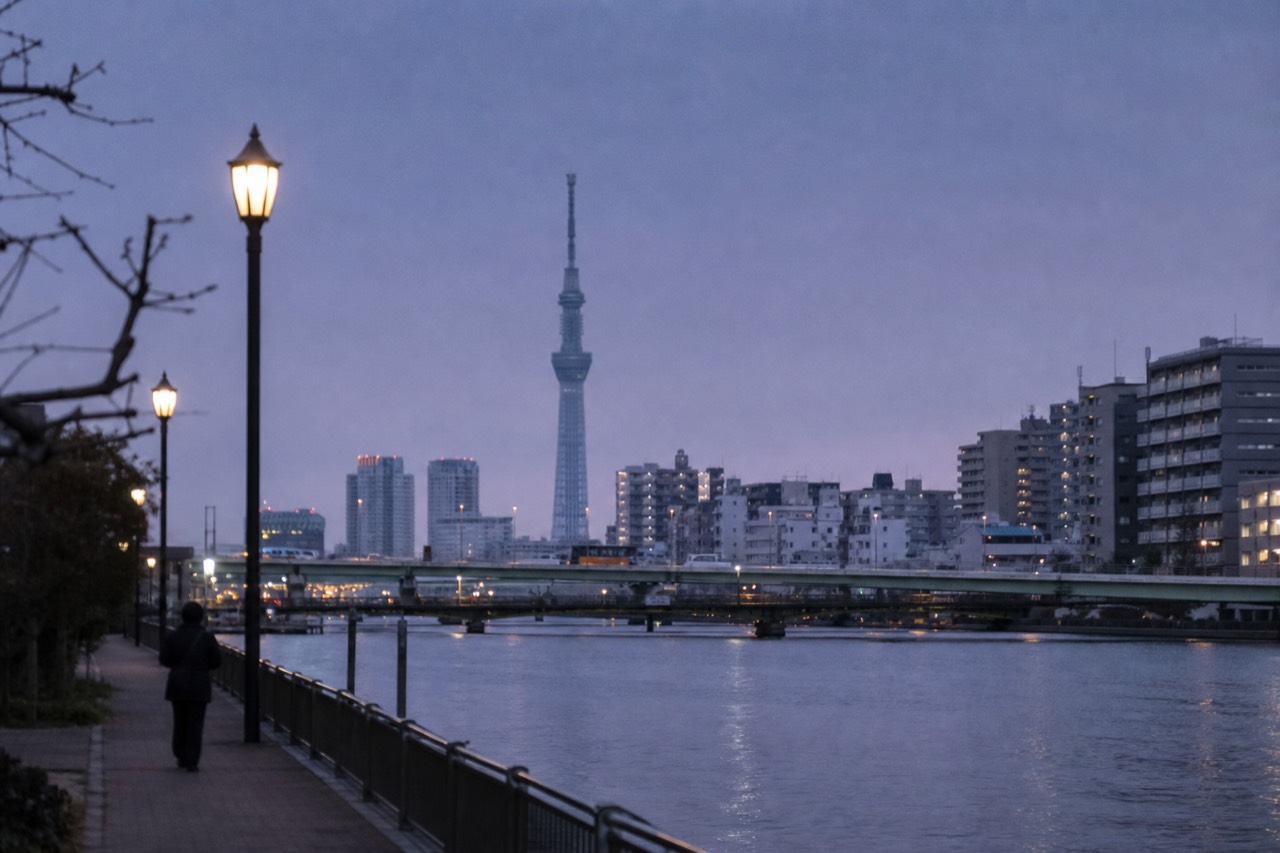
The question almost always arrives on a train. Someone spots the tower through the window somewhere around Asakusa, takes in the scale of it, and asks whether the thing is worth going inside or just worth looking at. Fair question. Tokyo Skytree is a broadcasting tower carrying two paid viewing levels, one at 350 metres and one at 450, and the honest answer depends less on the tower than on the weather and on what else you have already booked.
Start with the part nobody disputes. At 350 metres the Tembo Deck is the highest mainstream view in Japan, it costs from about 1,800 yen online, and unlike the city's most in-demand deck it almost always has space this week. For a visitor who decided last night, that combination is hard to beat.
What do you actually get for the price?
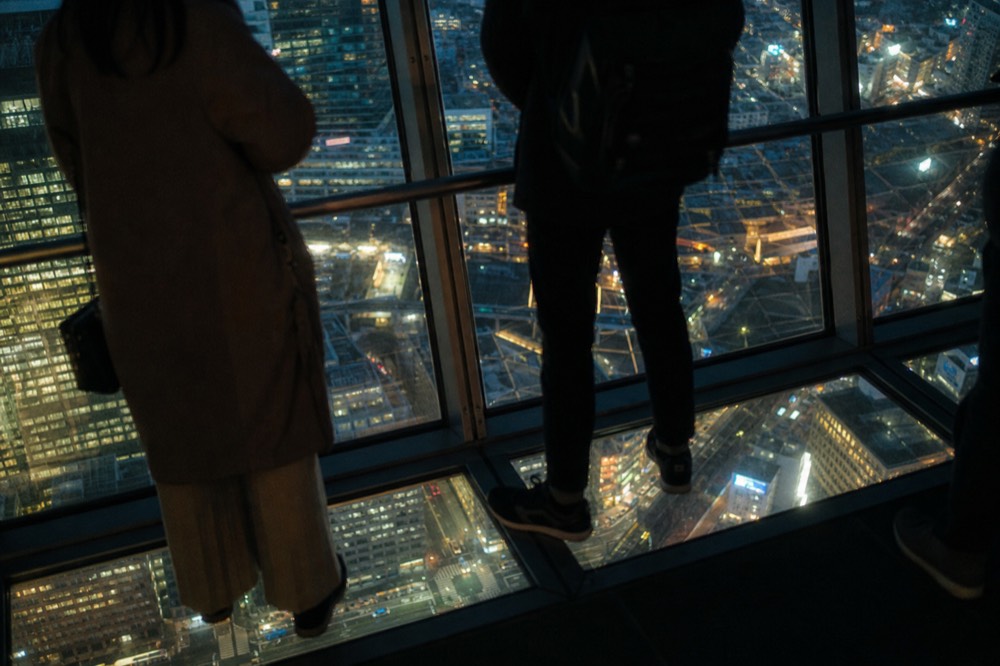
The base ticket puts you on the 350-metre Tembo Deck: a fully enclosed circular level with a glass floor panel, a cafe and a restaurant, and a horizon that runs across the whole Kanto plain. The 450-metre Tembo Galleria is a separate upcharge, reached by a sloping glass walkway from the deck below.
Two levels, two very different propositions. The Tembo Deck is where the tower does its job: you arrive, the city opens out, and the low eastern wards below you make the height legible in a way that a wall of skyscrapers never would. The glass floor panel is a genuinely good gimmick, and the restaurant level means you can turn the visit into a meal rather than a lap.
The Galleria is the tier to think about carefully. Another 100 metres for roughly 1,200 yen more as a combo, or about 1,400 yen added at the tower, and the practical difference is smaller than the number suggests. What changes at 450 metres is distance, not detail, and plenty of visitors come back down saying the cheaper half was the better half. Current tiers are listed on the official ticket page, and the counter charges roughly 500 yen more than booking ahead. This is a separate booking from anything else on this site: if you decide the tower earns its own visit, check the current Tembo Deck ticket here.
| Ticket | Height | Adult price | What you are buying |
|---|---|---|---|
| Skytree, Tembo Deck | 350 m | From about 1,800 yen online | Highest mainstream deck in Japan, glass floor panel, restaurant |
| Skytree, Deck plus Galleria | 450 m | From about 3,000 yen online | The record height and a longer horizon |
| Galleria added at the tower | 450 m | About 1,400 yen on top | The same level, bought late |
| SHIBUYA SKY, before 15:00 | 229 m | 2,700 yen online | An open rooftop directly over the Scramble Crossing |
| SHIBUYA SKY, from 15:00 | 229 m | 3,400 yen online | The same roof at sunset and after dark |
| Metropolitan Government Building | 202 m | Free | Wide central Tokyo at no cost, Shinjuku |
| Sunshine 60, Tenbou Park | 251 m | 700 yen weekday | The cheapest paid height in the city |
What are the honest downsides?
Three of them. Every view is through glass, which means reflections in almost any night photograph. Haze from June through September can flatten the distance to grey, and the taller you go the more air you are looking through. And the Galleria upcharge buys height rather than a meaningfully different view.
The glass is structural, not a complaint about cleanliness. Enclosed decks are why Skytree never closes for weather, and the same panes put a layer between you and everything you came to see. After dark the interior lighting bounces back, so phone photographs pick up a ghost of the room behind you unless you press the lens flat against the glass.
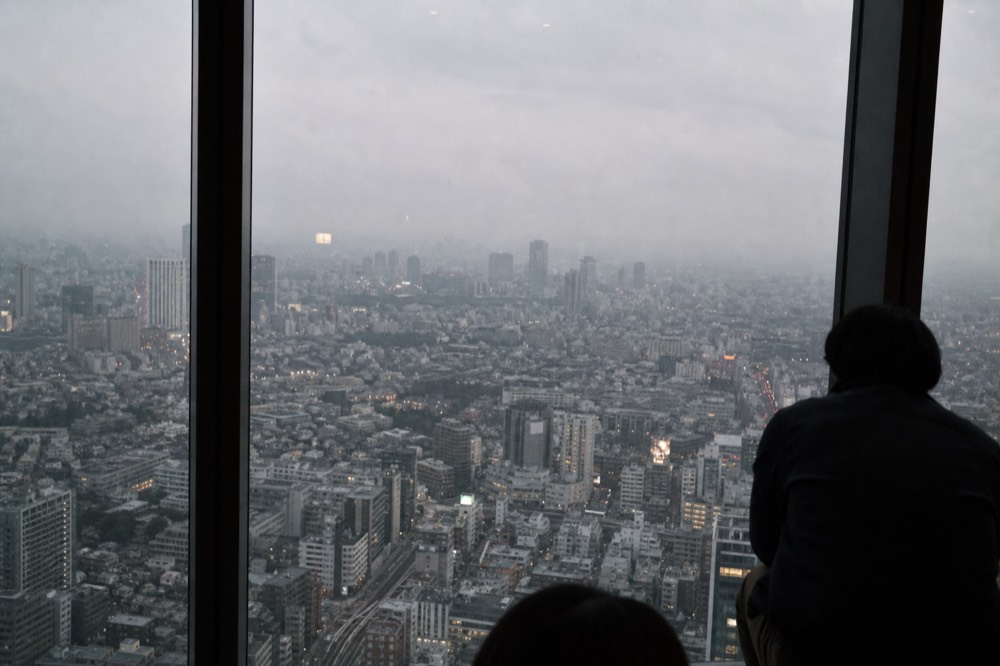
Haze is the bigger risk and it is seasonal. Summer humidity over the Kanto plain erases the far distance whatever the forecast says about sunshine, and height makes that worse, because more altitude means more air between your eye and the horizon. On those days a 350-metre deck delivers less than a 200-metre one on a clear February morning, a seasonal pattern broken down in when Fuji actually appears over Tokyo.
The third downside is a spending decision rather than a flaw. A 3,000 yen combo spends your whole view budget in one building on one kind of experience. Split it across the full field of Tokyo decks and you get a free 202-metre deck in Shinjuku plus an open-air rooftop.
When is Shibuya Sky the better spend?
Whenever the point of the visit is a subject rather than a number. Shibuya Sky is 229 metres, open to the sky, and sits directly above the Scramble Crossing. It costs 2,700 yen online before 15:00 and 3,400 from 15:00, and unlike Skytree it releases tickets only 14 days ahead.
The difference is what fills the frame. From 350 metres, streets read as pattern and people disappear entirely. From 229, you watch a specific crowd gather at a specific curb and release across the intersection roughly every two minutes, and that motion is the thing visitors describe when they get home. No amount of extra altitude produces it, because altitude is exactly what destroys it.
Then there is the roof. Shibuya Sky's Sky Stage is the only open-air deck among Tokyo's major viewpoints, which is why bags, hats, tripods, selfie sticks, food and drink are all barred up there and lockers sit on the floor below. In exchange, nothing sits between your camera and the city. Blue hour looks the way your eye saw it, with no reflection of a ceiling light in the middle of the shot. The official rooftop information page lists the zones and the current rules.
The catch is availability, and it runs the opposite way to Skytree's. Online sales open exactly 14 days before the date at midnight Japan time, sunset windows disappear within minutes, and when a date sells out online the 14th-floor counter has nothing left either. If your dates are set, check which slots are still open early rather than late, or take a guided sunset entry that holds the slot for you and cancels free up to 24 hours out.
So should you go up the Skytree?
Go up if you want maximum height, guaranteed weather, a same-week ticket or an easy pairing with Asakusa, and buy the Tembo Deck rather than the combo unless the record height matters to you. Skip it if you have one deck in you and want the Crossing, the open air or a photograph without glass.
The pairing argument is the strongest one nobody makes. Skytree is one Tobu stop or a twenty-minute river walk from Asakusa, so a morning at Senso-ji and an ascent afterwards is a genuinely coherent half day. From Shibuya or Shinjuku it is about 35 to 40 minutes each way, which is an hour of train time that a west-Tokyo itinerary may not want to spend.
For a week in Tokyo, do both. About 1,800 yen for the Tembo Deck and 2,700 for the Shibuya rooftop is under 5,000 yen for two readings of the same city that barely overlap. The direct head-to-head sits in the Shibuya Sky and Skytree comparison.
For one deck on a first trip, my answer has been the same for years: take the rooftop, book it the day the window opens, and go at sunset. You can compare every route onto the Shibuya deck in one place, including guided visits that include entry if the midnight release is not a fight you want.
Frequently asked questions
Is the Tokyo Skytree Galleria worth the extra?
For most people, no. The jump from the 350-metre Tembo Deck to the 450-metre Galleria costs roughly 1,200 yen more as a combo, or about 1,400 added at the tower, and it buys distance rather than a different view. Buy it if standing at the highest public point in Japan matters to you as an experience in itself.
How much does the Tokyo Skytree cost?
The Tembo Deck starts around 1,800 yen for an adult booked online, and the combined Deck plus Galleria ticket starts around 3,000 yen. Buying at the counter on the day costs roughly 500 yen more than the advance price. Prices and time-slot availability are listed on the tower's official ticket page.
Is Skytree or Shibuya Sky better for a first trip to Tokyo?
Shibuya Sky for most first-time visitors, because the Scramble Crossing directly below and the open rooftop are what people remember. Skytree wins if you want the highest possible view, need a ticket this week, or are already spending the day in Asakusa. Skytree is also the safer choice in bad weather.