Seeing Mount Fuji from Tokyo: When It Shows and Where to Stand
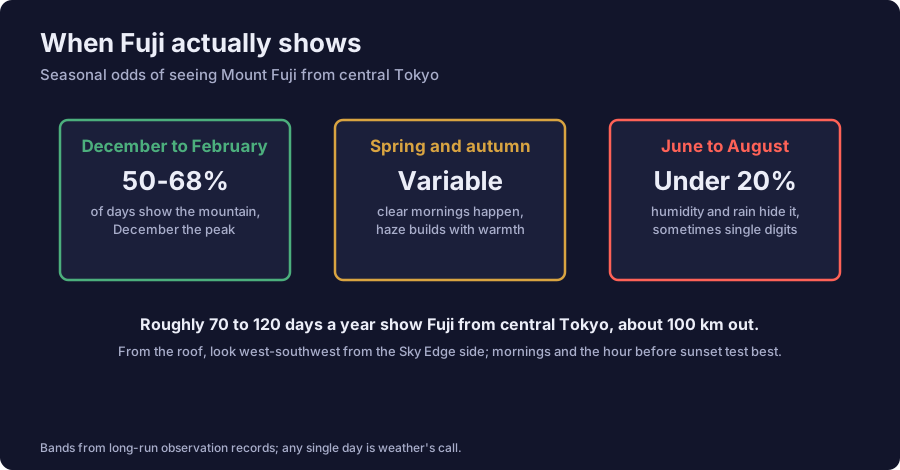
Roughly 100 kilometres of city air stand between a Tokyo rooftop and the mountain. On perhaps 70 to 120 days a year that air gets out of the way, and almost all of the good ones fall between December and February.
 By Mia Nakamura, licensed Tokyo tour guide based in Shibuya
Short answer
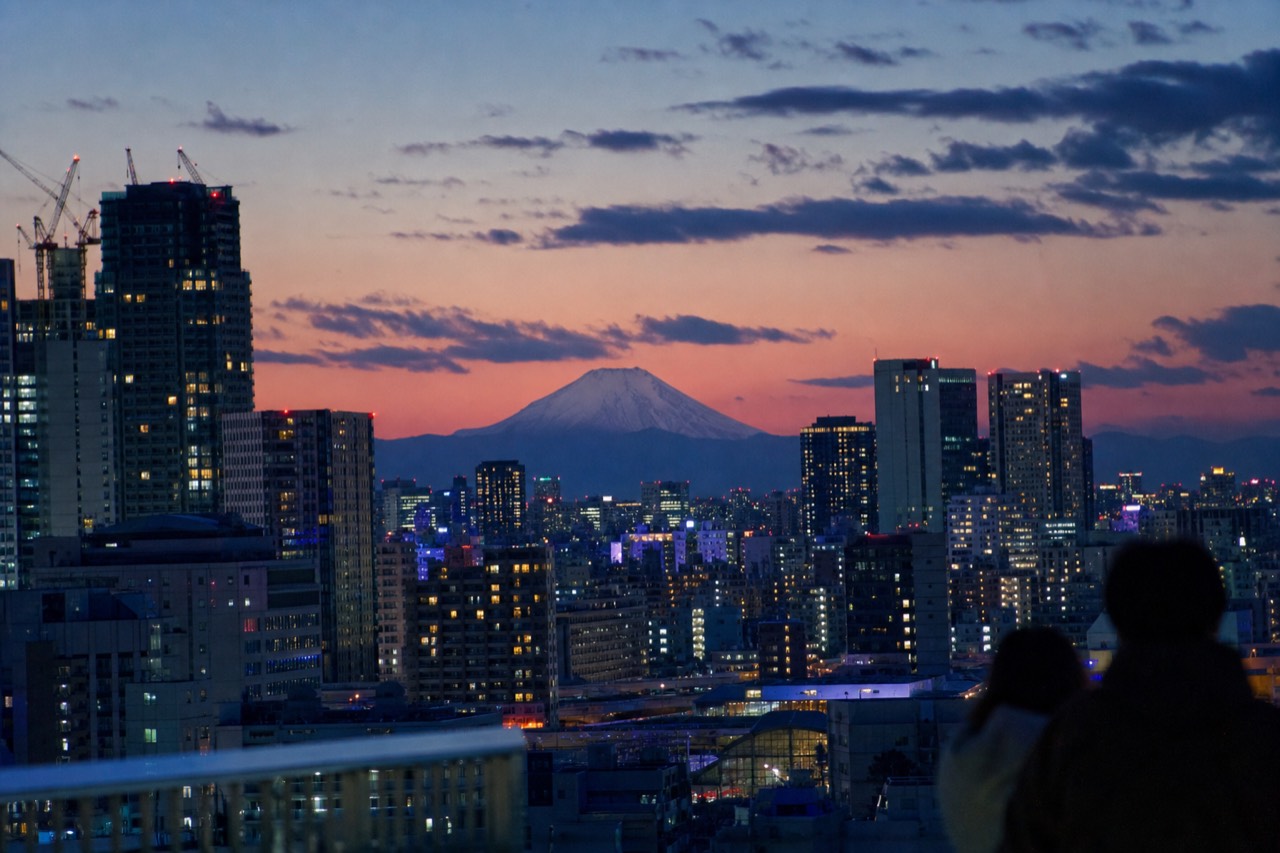
Fuji sits about 100 km west-southwest of Shibuya, and Tokyo gets roughly 70 to 120 clear or partial days a year. December through February carry the best odds, often 50 to 68 percent of days, while June to August drop under 20 percent. Early morning is clearest; from an open rooftop, late afternoon gives the strongest silhouette.
Every December my messages fill with the same photograph, sent by people who had no idea it was coming: a white cone parked on the horizon past a thousand rooftops, shot through a train window or from a hotel corridor on the twentieth floor. They did not plan it. The air simply changed overnight, the northwest wind came down off the mountains, and a thing that was invisible for six months was suddenly the largest object in the city.
That is the honest shape of this question. Mount Fuji is not a Tokyo landmark you can schedule. It is a weather event that happens to be 3,776 metres tall and about 100 kilometres away, and the difference between the trip where you see it and the trip where you do not is mostly the month on your ticket, secondarily the hour, and only after that the building you paid to stand on. I have guided people through Shibuya since 2022, and I have learned to manage expectations in August and to start watching the forecast obsessively in the second week of December.
Can you actually see Mount Fuji from Tokyo?
Yes, on a limited number of days. Fuji stands roughly 100 km west-southwest of central Tokyo, and clear or partial views are estimated at about 70 to 120 days a year, depending on how you define visible and where you stand. Winter delivers most of them.
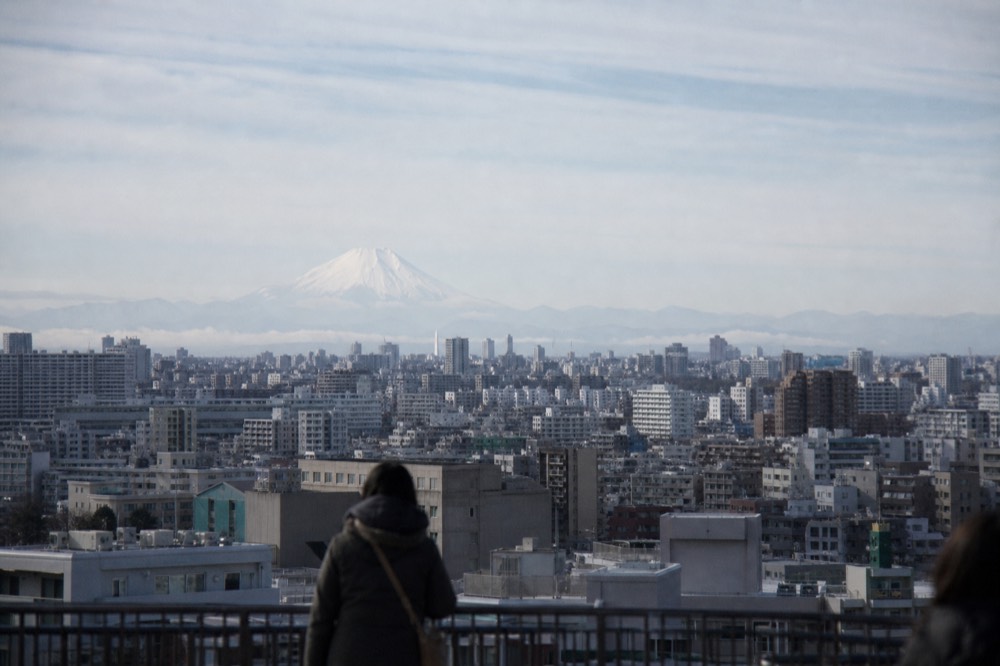
Three things sit between you and the mountain: distance, moisture and particulate haze. A hundred kilometres of air is a lot of air, and every gram of water vapour in it scatters the light coming off the summit. That is why the mountain vanishes in a Tokyo summer, when the basin holds humidity like a lid, and reappears in winter, when cold, dry continental air pushes through and the horizon hardens into a line you could cut yourself on.
The long record shows this getting better, not worse. Observation counts from the Fuji side of the equation, taken at fixed morning times across the 1991 to 2025 period, and Tokyo-area reporting alongside them, both show visibility improving from the roughly 43 days a year recorded in the 1960s and 1970s, when the city's air was genuinely dirty. Cleaner air has bought back weeks of mountain. Tokyo counts still run lower than sites on Fuji's southern flank, because those places are close enough that haze matters less, but the direction of travel is good.
There is no new obstruction story to report either. Despite a decade of tower-building across the city, no verified account from 2025 or 2026 identifies a new structure that has meaningfully blocked Fuji from the established central Tokyo viewpoints. The mountain is where it always was, and so are the buildings that face it. The background on the peak itself, its shape, its height and its status as a sacred site, sits on the Mount Fuji entry if you want the geology before the sightline.
Where is the best viewpoint of Mount Fuji from Tokyo?
An open-air rooftop facing west beats a window every time, which puts SHIBUYA SKY at 229 m first for atmosphere and the free city hall observatory in Shinjuku at 202 m first for value. Tokyo Skytree wins on raw altitude at 350 m and 450 m, but you see the mountain through glass.
The ranking depends on what you are optimising. If you want the mountain in a photograph with nothing between the lens and the horizon, open air is the whole argument, and there is exactly one general-admission open rooftop in the middle of the city at that height. If you want the mountain seen at all, on the cheapest possible terms, the Tokyo Metropolitan Government Building has been giving that away for free for decades and its western windows point almost exactly at Fuji.
Glass is not fatal, to be clear. Skytree's decks give you a sightline over everything, and from 450 m the curvature of the plain works in your favour. What glass costs you is contrast and colour: an extra layer of reflection between a low winter sun and a distant white cone, at the exact moment the light is doing something interesting. On a hard clear morning it barely matters. On a marginal afternoon it can be the difference between seeing an outline and seeing nothing.
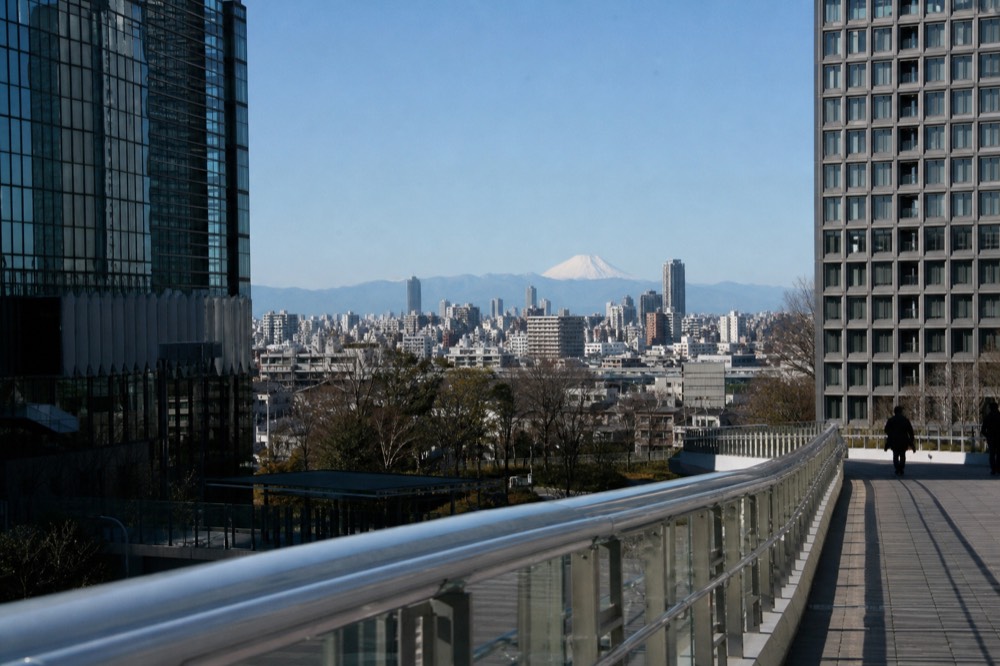
The one vantage point people forget is the Bunkyo Civic Center's free lounge on the 25th floor, which frames Fuji behind the Shinjuku towers rather than beside them. It is a composition rather than a panorama, and for photographers it is arguably the most interesting free angle in the city. If you want the full ladder of heights and admission prices, every Tokyo observation deck compared sets them side by side.
Height is also less decisive than most people assume for this particular target. Fuji is 3,776 m tall and 100 km away, so whether you stand at 202 m or 450 m changes the angle by a fraction of a degree. What actually changes is how much city clutter sits along the bottom of your sightline, and how much glass sits in front of your eyes. That is why a 229 m open roof competes with a 450 m glass gallery on this one question, and why the free 202 m room in Shinjuku is not the poor relation it sounds like. If you have decided the open-air version is what you want, check what is left for your dates early, because the winter slots that pair clear air with good light are the first to go.
| Viewpoint | Height | Admission | Open air? | Fuji direction |
|---|---|---|---|---|
| SHIBUYA SKY rooftop | 229 m | 2,700 yen before 15:00, 3,400 yen from 15:00 | Yes, full open roof | West to southwest, unobstructed |
| Tokyo Metropolitan Government Building | 202 m | Free | No, glass windows | West, direct |
| Bunkyo Civic Center Sky View Lounge | 25th floor | Free | No, glass windows | Southwest past the Shinjuku towers |
| Tokyo Skytree Tembo Deck | 350 m | From about 1,800 yen online | No, glass | Southwest, distant |
| Tokyo Skytree Tembo Galleria | 450 m | Deck plus Galleria from about 3,000 yen | No, glass | Southwest, the highest sightline in the city |
| Roppongi Hills Tokyo City View | About 250 m | About 1,800 to 2,400 yen | Indoor deck | West, good separation |
| Sunshine 60 Tenbou Park | 251 m | 700 to 900 yen | No, glass | Southwest, partly across the city |
| Tokyo Tower Main Deck | 150 m | 1,500 yen | No, glass | West, low and often blocked |
Which months actually give you a chance?
December is the peak, with clear or partial Fuji days often falling in the 60 to 68 percent range, and January and February hold the same broad 50 to 68 percent winter band. June through August collapse to under 20 percent and sometimes into single digits. March, April, October and November are moderate and highly variable.
The seasonal split is not subtle, and it is the single most useful thing on this page. Winter in Tokyo is dominated by dry air coming off the continent, which pushes the humidity down and the visibility out. Summer is dominated by a humid maritime pattern and, in June, by the rainy season proper. Those are different climates wearing the same city, and the mountain simply is not in the summer one for most of the time.
I tell people to read the shoulder months honestly. March and April can be beautiful and can also be smothered by haze and drifting dust from the mainland, sometimes on consecutive days. October and November improve steadily as the first cold fronts arrive, and by late November the odds are already climbing back toward the winter band. September is its own case: typhoon season is unhelpful, but the twelve hours after a typhoon clears the basin can produce the sharpest air of the entire year.
If your dates are fixed and they fall in July, plan a good visit that does not depend on the mountain. The city view from an open roof at sunset is worth the ticket on its own terms, which is the argument made properly in the honest verdict on the deck. Treat Fuji as a bonus in summer and as a genuine target in winter, and you will not be disappointed either way.
| Month | Odds of a clear or partial Fuji day | Air and sky | What the mountain looks like |
|---|---|---|---|
| December | Highest of the year, roughly 60 to 68 percent | Driest air, strong northwest wind | Full snow cap, hard edges |
| January | High, inside the 50 to 68 percent winter band | Cold and dry, best contrast | Snow well down the flanks |
| February | High, winter band holds | Cold, occasional drifting dust | Snow cap with longer afternoon light |
| March | Moderate and variable | Haze and dust arrive | Softer outline, still capped |
| April | Moderate and variable | Warming, more haze by midday | Snow retreating up the cone |
| May | Variable, declining toward the rains | Humid afternoons | Often a morning window only |
| June | Poor, often under 20 percent | Rainy season cloud | Rarely visible at all |
| July | Poor, sometimes single digits | Peak humidity | Rarely visible at all |
| August | Poor, sometimes single digits | Heat haze from mid-morning | Rarely visible at all |
| September | Variable, typhoon driven | Superb air right after a storm clears | Bare summit rock, little snow |
| October | Moderate, improving late | First cold fronts | First snow returns to the summit |
| November | Moderate to good, improving fast | Air drying out week by week | Snow cap re-forming |
What time of day gives the clearest view?
Early morning, roughly 6 to 9 am, is when the air is cleanest, with 8 am specifically favoured by fixed-time observation records. Visibility usually declines by noon as daytime warming builds haze and cloud. Late afternoon into sunset trades clarity for drama and gives the strongest silhouette.
Two different goals pull in opposite directions here, and it is worth knowing which one you have. If the goal is to see the mountain, clearly, in detail, with snow texture visible, go early. Warming through the morning lifts moisture off the plain, convection starts building cloud around the peak, and by early afternoon on a marginal day the cone can dissolve into the sky behind it.
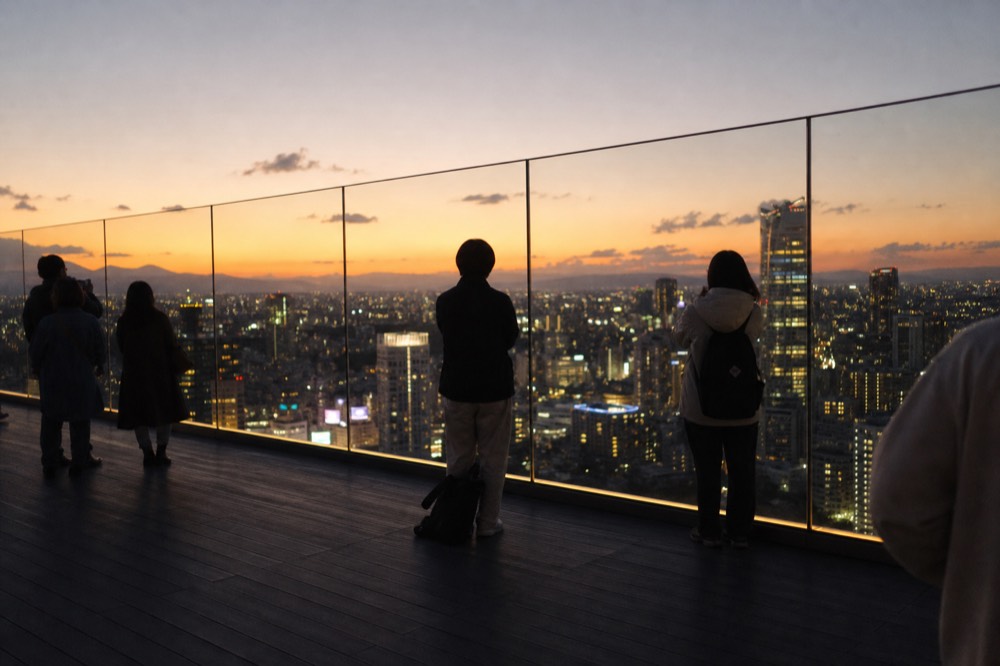
If the goal is a photograph people react to, the afternoon wins despite worse odds. Fuji seen from Tokyo at sunset is backlit, because the mountain sits almost exactly where the sun goes down in the colder months, and a backlit cone against an orange sky is a stronger image than a clean grey-blue one at breakfast. The trade is real: you are accepting a lower chance of seeing anything in exchange for a better picture if you do.
There is a practical wrinkle for the deck specifically. It opens at 10:00, which means the sharpest morning window has already passed by the time you can get up there. That pushes the deck's best Fuji play toward late afternoon by default, and it is why sunset slots and Fuji hunting end up being the same booking. Sunset times shift by more than two hours across the year, so check the Tokyo sunrise and sunset table for your exact date before you pick a slot, or read the month-by-month breakdown in the sunset timing guide.
| Window | Air clarity | What Fuji looks like | The trade |
|---|---|---|---|
| 6:00 to 9:00 | Best of the day | Sharp, detailed, snow texture visible | Most city decks are still shut |
| 9:00 to 11:00 | Good, starting to soften | Clear outline, flatter light | The deck opens at 10:00, so this is the first real chance |
| 11:00 to 14:00 | Weakest | Often washed out or lost in cloud | Convenient hours, poor odds |
| 14:00 to 16:00 | Recovering slightly | Outline returns, low contrast | Quieter on the roof than sunset |
| Golden hour to sunset | Variable, haze often lingers | Backlit silhouette, strongest image | Lower odds, highest reward, busiest slot |
| After dark | Not applicable | Gone | The city becomes the view instead |
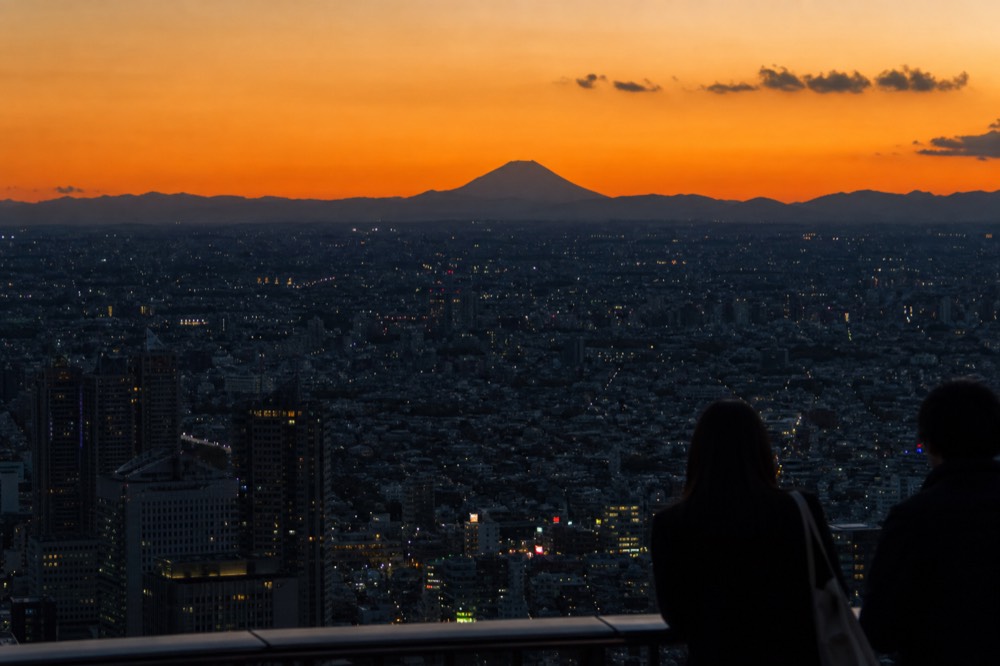
Where does Fuji sit from the Shibuya Sky rooftop?
West to southwest, roughly 100 km out, low on the horizon and small in the frame. Stand on the western side of the rooftop: the Sky Edge glass corner and the open western helipad area both give an unobstructed line. On clear days the mountain reads as a pale triangle sitting above the Tokyo sprawl.
People come up expecting Fuji to dominate. It does not. At a hundred kilometres the cone occupies a modest slice of horizon, and the first time most visitors see it they have to be pointed at it. Once you have found it you cannot stop seeing it, which is a strange and reliable effect. The trick is to look lower than instinct suggests, at the seam where the city stops and the sky starts, and to scan west and then south of west.
Scale it if that helps. Hold your arm out and the cone is roughly a thumb-width wide from up there, sitting just above the point where the last suburbs blur into grey. In good air you can pick out the snow line and the shallow notch on the summit rim. In average air you get an outline that comes and goes as your eyes adjust, which is why people standing beside each other often disagree about whether the mountain is there at all. Give it two full minutes of looking before you decide.
The rooftop layout helps. The Sky Stage is a genuine open roof at 229 m rather than a balcony, so you can walk the perimeter and choose your side. Sky Edge, the glass corner, is the famous spot and points across the Crossing, so it is not automatically the Fuji corner. The western edge, past the helipad area, is where the mountain sits, and it is usually far less crowded than the queue at the corner, which is a small gift on a busy evening.
Weather governs everything up there, and not only for the view. The rooftop closes without notice in strong wind, rain, lightning or extreme heat, and when it does, visitors are held on the indoor 46F Sky Gallery. That matters here because the exact conditions that produce the sharpest winter Fuji, a hard northwest wind clearing the basin, are also the conditions most likely to close the roof. The official SHIBUYA SKY pages state the closure policy plainly, and refunds apply only before entry. If you are choosing a winter slot around this, it is worth checking what the deck is actually like inside so the indoor fallback is not a surprise.
| Where to stand on the roof | Faces | What is in the frame | Note |
|---|---|---|---|
| Western edge past the helipad | West to southwest | Fuji low on the horizon, city plain below it | The Fuji position, usually less crowded |
| Sky Edge glass corner | Northeast over the Crossing | The scramble, the station, the towers | Famous, queued, not the Fuji angle |
| Northern perimeter | North | Shinjuku towers, Yoyogi green | Good for the skyline, no Fuji |
| Cloud Hammocks area | Upward | Sky and cloud | Lying down, not a horizon spot |
| 46F Sky Gallery windows | Full circuit indoors | Same directions through glass | Where you go when the roof closes |
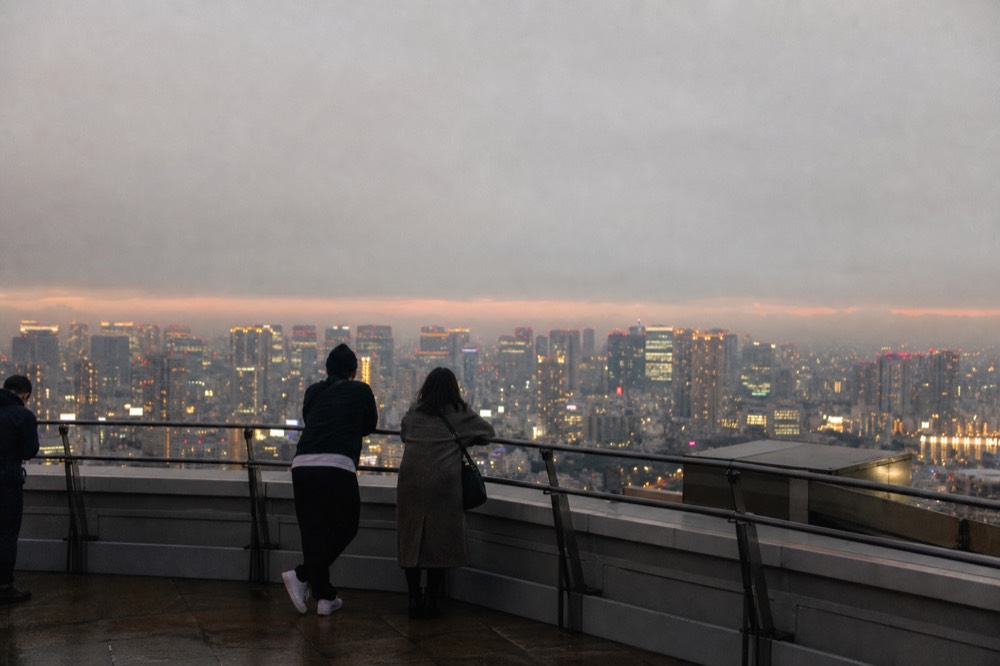
Which free Tokyo viewpoints show Fuji, and are they good enough?
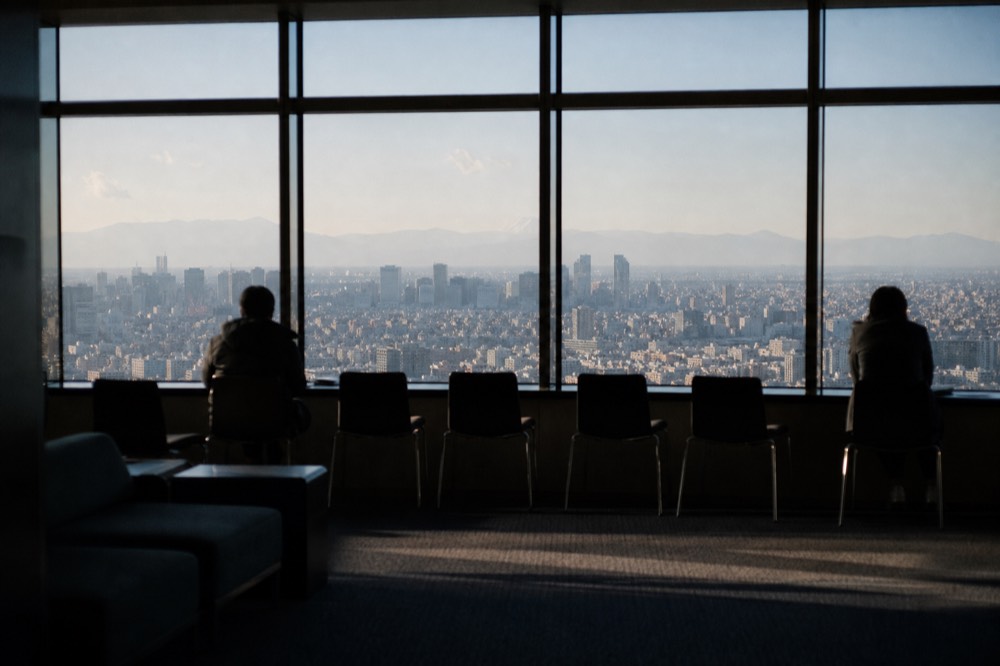
Two are genuinely good. The Tokyo Metropolitan Government Building in Shinjuku puts you at 202 m for nothing, with western windows aimed at the mountain, and the Bunkyo Civic Center's 25th-floor lounge frames Fuji behind the Shinjuku skyline. Both are indoors, both are free, and neither takes a reservation.
The city hall observatory is the default answer for anyone travelling cheaply, and it deserves the reputation. Two towers, two observatories, no ticket, a lift straight up from the ground floor and a view west that runs to the mountains on a clear day. Tokyo's own tourism page for the observatory lists the current opening details, which shift with maintenance days more often than visitors expect.
Free does not mean equivalent, and this is the honest part. You are looking through glass, in a room designed as a municipal amenity rather than a viewing experience, usually with reflections from interior lighting on the inside of the pane. The mountain shows up. The photograph is harder. And the queue on a bright winter Sunday can run long enough that the free ticket costs you an hour instead of yen.
Bunkyo Civic Center is the connoisseur's pick and almost nobody who is not a photographer knows about it. Its value is compositional: Fuji sits behind the cluster of Shinjuku high-rises rather than alone above the sprawl, which gives a picture a foreground, a middle ground and a distance. If you have three days in Tokyo and one of them is clear, that lounge is worth the detour more than a second paid deck is.
| Free option | Height | Fuji view quality | Reservation | Best for |
|---|---|---|---|---|
| Tokyo Metropolitan Government Building | 202 m | Direct west, through glass | None, walk in | The cheapest real Fuji sightline in Tokyo |
| Bunkyo Civic Center Sky View Lounge | 25th floor | Fuji framed behind the Shinjuku towers | None, walk in | Photographers who want a composition |
| Street level in western Tokyo | Ground | Occasional, between buildings | None | Luck, on the clearest winter mornings |
| Train windows heading west | Varies | Genuinely good on the right line and seat | None | Travellers already moving that way |
Is a day trip to Fuji better than seeing it from a deck?
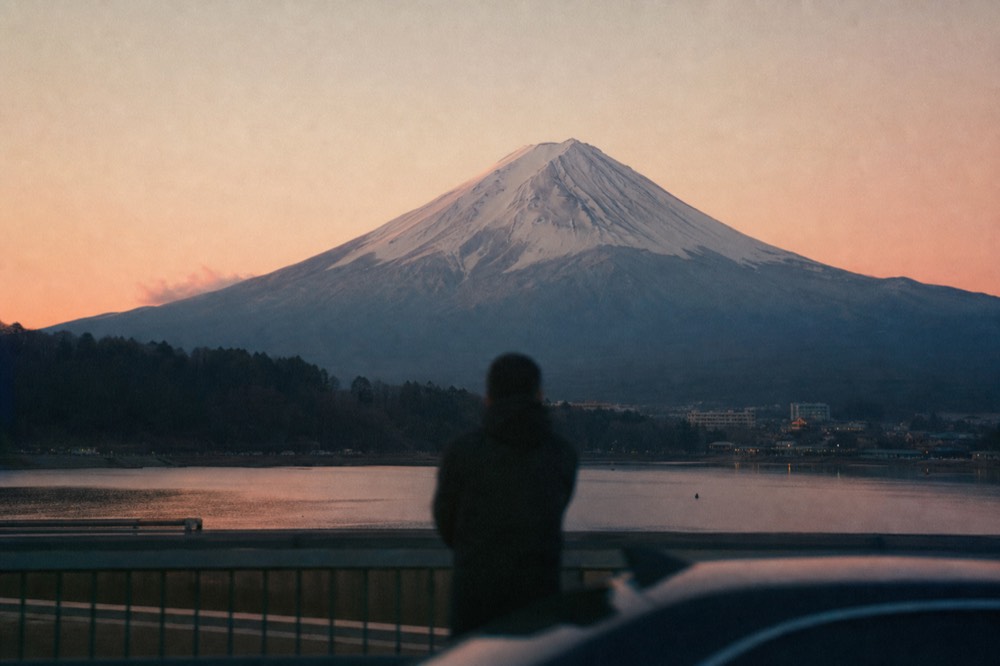
They answer different questions. A day trip puts you at the mountain's foot with the cone filling the sky, and costs a full day plus transport, with the same weather risk. A deck view costs one to two hours and a single admission, and gives you Fuji as one element of a Tokyo panorama rather than the subject.
The honest comparison starts with the weather, because the risk does not go away when you travel. Cloud that hides Fuji from Tokyo very often hides Fuji from Kawaguchiko too, and a day trip that lands on the wrong weather is a much more expensive disappointment than a deck visit that lands on the wrong weather, because the deck still has an entire city underneath it. Several people I have guided have made the trip out and seen grey.
What the trip buys, when it works, is scale. From the lake district the mountain is not a distant triangle, it is a wall of snow occupying half the sky, close enough to see the ridges and the old lava flows. Nothing seen from Tokyo comes near that, and if the mountain is the reason you came to Japan, no observation deck substitutes for standing under it. The climbing season, its dates and the current rules are set out on the official Fuji climbing site, which is also the clearest source on when the summit is snow-free. A separate booking from anything else on this site: if a spare day and a clear forecast line up, check a guided day trip out to the lakes here.
The pragmatic answer for most one-week Tokyo itineraries is to do neither exclusively. Book an evening on the roof in a winter month, look west, and treat the mountain as the thing that might happen. If it does, you have your picture and your day is intact. If you have a spare day and the forecast turns hard clear, then go out to the lakes. Booking the deck for a specific evening is easy enough to plan around, and you can see which sunset slots are still open before you commit a whole day to the train.
| View from a Tokyo deck | Day trip to the Fuji area | |
|---|---|---|
| Time cost | 1 to 2 hours | A full day, transport included |
| Fuji in the frame | Small, distant, on the horizon | Dominant, close, detailed |
| Weather risk | Same risk, cheap to absorb | Same risk, expensive to absorb |
| What you get if Fuji hides | A full Tokyo panorama at 229 m | Lakes, towns and grey sky |
| Best months | December to February | December to February, plus the clear autumn windows |
| Suits | Anyone on a city itinerary | Travellers for whom the mountain is the trip |
How do you improve your odds on the day you have?
Watch three signals: wind direction, humidity and what happened in the last twelve hours. A northwest wind after a cold front, low humidity and a night of clear sky are the winning combination. A warm still afternoon in a humid week is the losing one, whatever the sunshine forecast says.
Sunshine is the misleading variable, and it fools people constantly. A bright, blue, warm day in April can be completely useless for Fuji, because warm and bright is exactly what builds the haze layer that hides a hundred-kilometre sightline. Meanwhile a cold, blustery December afternoon that looks unpleasant from a hotel window is often the sharpest air of the month. Judge the air, not the sun.
The second signal is timing around weather systems. The window immediately after a front passes, or the morning after rain has scrubbed the basin, is when Tokyo's horizon is at its most transparent. That is also true after a typhoon in September, which is the one summer-adjacent case where the mountain genuinely shows up. If you have any flexibility in when you go up, spend it on chasing a front rather than on chasing a particular date.
Third, stack your chances. Book a slot in the right month, take a west-facing position, go up in the afternoon when the deck's hours allow it, and accept that you are playing a probability rather than buying a guarantee. If the day comes up hard clear and you have not booked, the release calendar works against you: online sales open exactly 14 days ahead at 00:00 Japan time, and sunset windows on popular dates disappear within minutes. Which is a long way of saying that if you want the winter light, the direct rooftop admission is a decision to make two weeks out, not on the morning of.
One last piece of advice that costs nothing. If your slot lands on a marginal day, go up anyway and look west during the first ten minutes, then again just before you leave. Haze on the western horizon shifts as the sun drops and the ground cools, and the mountain quite often appears late in a session after being absent at the start. People who take one look, decide it is a bust and spend the rest of the hour photographing the Crossing miss it more often than the weather does. A guided evening that walks the district first and puts you on the roof afterwards handles that timing for you, and you can see how the evening slots are running if you would rather not manage the clock yourself.
| Signal | Good for Fuji | Bad for Fuji |
|---|---|---|
| Wind | Northwest, off the mountains, brisk | Southerly, warm and damp |
| Humidity | Low, typical of a cold snap | High, typical of May to September |
| Recent weather | Cold front just passed, or overnight rain cleared | Several still warm days in a row |
| Sky | Cold clear blue with sharp edges | Bright but milky, whitening near the horizon |
| Season | December to February | June to August |
| Time since sunrise | Under three hours | Five to seven hours |
Two more pages are worth reading beside this one if the mountain is a priority. The head-to-head on the open roof against the tallest tower covers what 229 m of open air gives you that 450 m of glass does not, and the rooftop photography rules and spots explains what you can physically carry up there, which matters if you were planning to bring a long lens for the mountain. For the timing side of a winter booking, the sunset slot options are grouped in one place.
Frequently asked questions
Can you see Mount Fuji from Shibuya Sky?
Yes, on clear days, to the west and southwest at a distance of roughly 100 km. Stand on the western side of the open rooftop rather than at the famous glass corner, which faces the Crossing instead. Winter afternoons give the best combination of clear air and usable light, and the mountain reads as a small pale triangle rather than a dominant shape.
What month is best for seeing Mount Fuji from Tokyo?
December, with clear or partial views often on 60 to 68 percent of days. January and February stay inside the same broad winter band above 50 percent. The mountain is also at its most photogenic then, because the snow cap is full and the low sun sits close to where Fuji stands on the horizon.
Why can I not see Mount Fuji in summer?
Humidity and haze. A hundred kilometres of moist summer air scatters the light coming off the mountain, and the rainy season adds cloud on top. Clear or partial days drop under 20 percent from June through August, and sometimes into single digits. The exception is the day after a typhoon clears the basin, which can produce the sharpest air of the year.
Is the free Tokyo city hall observatory good enough for Fuji?
For seeing the mountain, yes. It sits at 202 m in Shinjuku with western windows pointed at Fuji, costs nothing and needs no reservation. What you give up is open air: you are shooting through glass with interior reflections, and on bright winter weekends the queue can be long. As a free sightline it is the best in the city.
What time of day should I go up to see Fuji?
Around 8 am gives the cleanest air, though most decks are shut then. Since the Shibuya rooftop opens at 10:00, the practical choices are mid-morning for clarity or late afternoon for a backlit silhouette. Visibility usually declines by noon as warming builds haze, so an early slot beats a lunchtime one on a marginal day.
Does bad weather close the rooftop even when Fuji is visible?
It can, and the overlap is awkward. Strong wind, rain, lightning and extreme heat all close the open Sky Stage without notice, and visitors are held on the indoor 46F level instead. Hard winter wind is exactly what clears the air for Fuji, so on the very best visibility days there is some chance you view the mountain through glass.