Shibuya Sky at Sunset: Best Time to Go, Month by Month
Golden hour on the roof lasts about forty minutes and the slot that holds it sells out in minutes. This is the month-by-month timing, the price line at 15:00, and what each entry window actually trades.
 By Mia Nakamura, licensed Tokyo tour guide based in Shibuya
Short answer
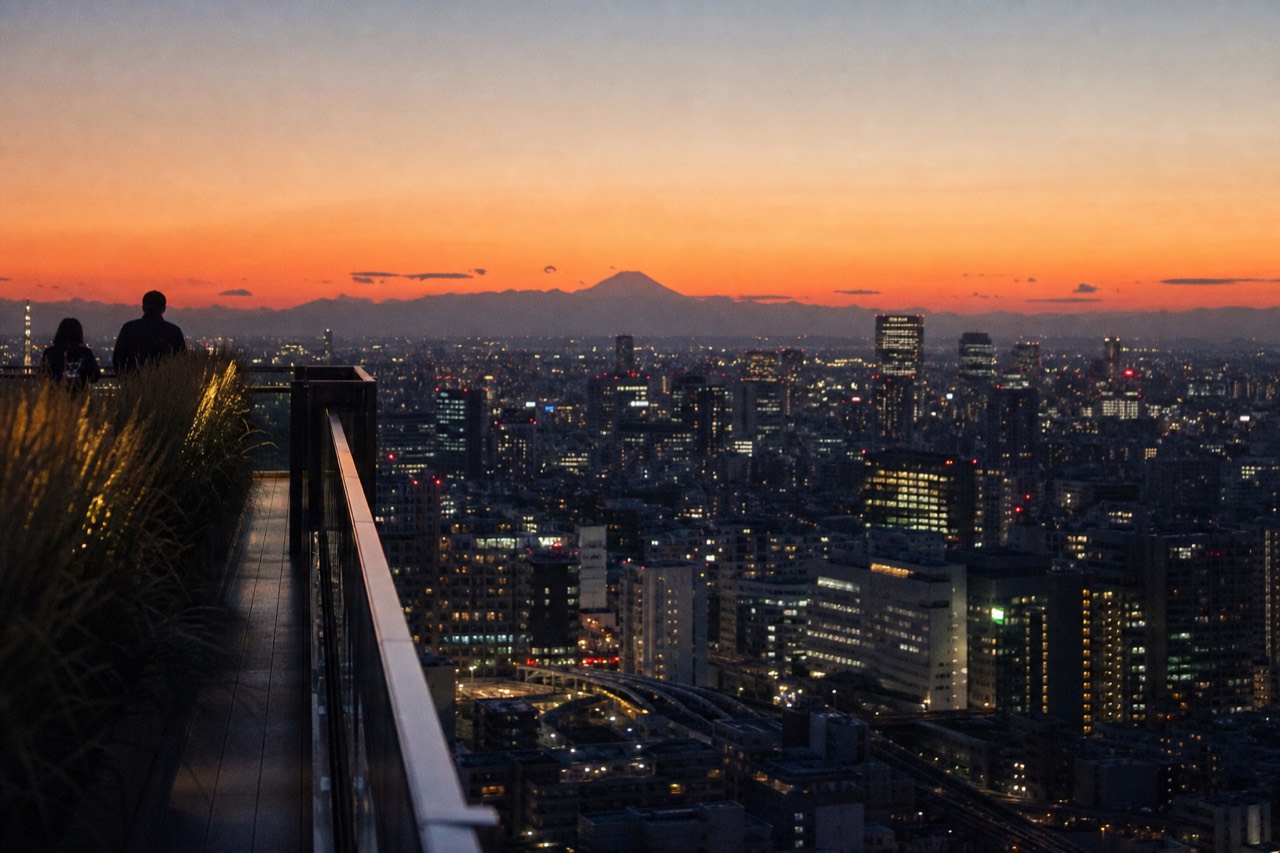
Aim to be on the rooftop about 45 minutes before sunset, which falls near 16:45 in December and just before 19:00 in July. Entry before 15:00 costs 2,700 yen online against 3,400 from 15:00, and nothing forces you out once you are inside, so a winter afternoon slot holds golden hour for the cheaper price.
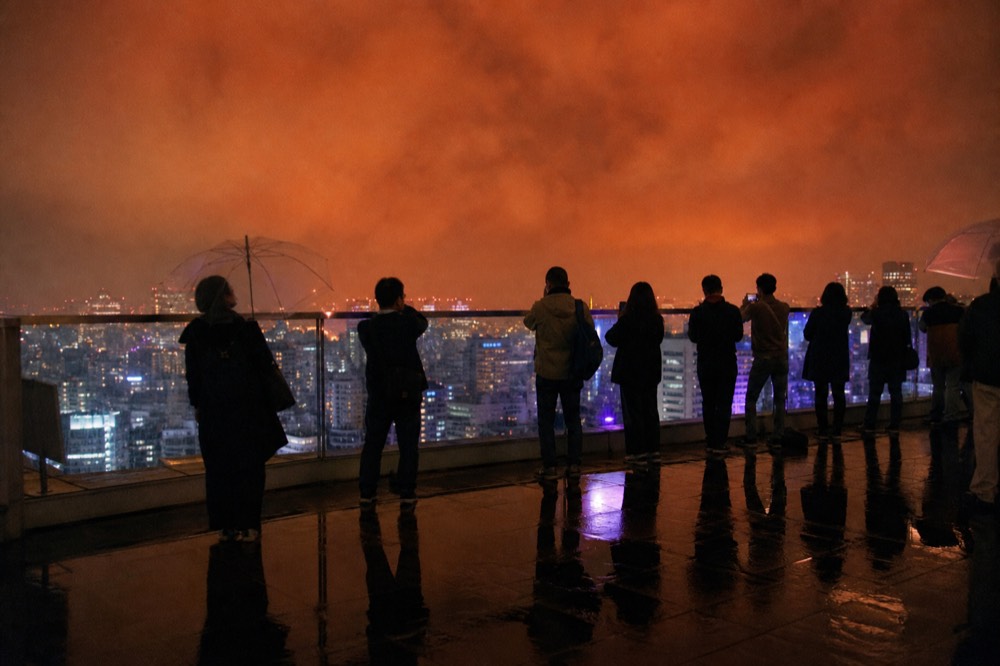
Ask me on a December afternoon and I will tell you to be through the 14F gate by four o'clock. The light over Tokyo at that hour goes from white to amber in about twenty minutes, the towers of Shinjuku catch it first, and if the air is dry you get Fuji sitting on the western horizon like a paper cutout. Then it drops. Forty minutes later the sky is navy, the Crossing below has turned into a river of white headlights, and half the roof has swapped sides to photograph the other direction.
Timing is the whole game here, more than at any other deck in the city, because this one is open to the sky and the sun is genuinely in the room with you. Get the hour right and you see two completely different cities for one admission. Get it wrong and you paid the higher price tier for a flat grey afternoon. Below is the month-by-month arithmetic, the hourly crowd pattern from someone who works these streets, and the one piece of timing that most visitors miss entirely.
When does the sun set over Tokyo, month by month?
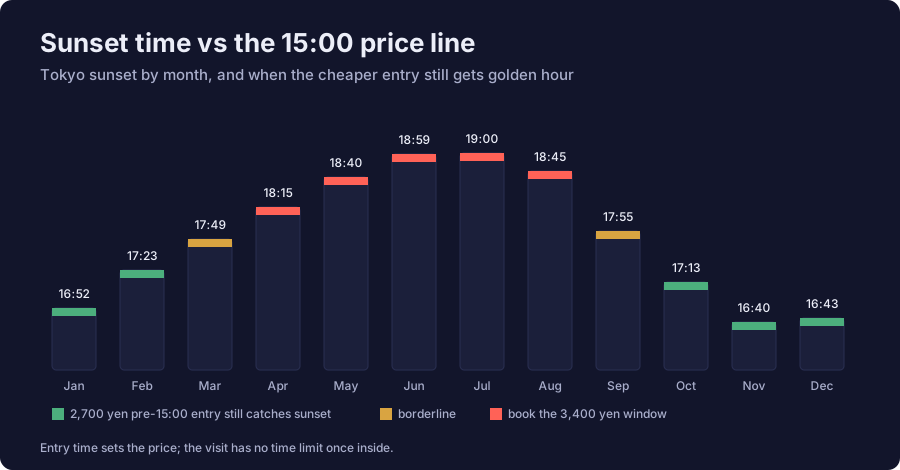
Tokyo's sunset swings by more than two hours across the year, from around 16:40 in late November to just before 19:00 in early July. Because the roof stays open until 22:30 with last entry at 21:20, the practical target is simple: be standing on the Sky Stage roughly 45 minutes before the listed sunset time for your date.
That 45-minute cushion is not padding. It covers the escalator ascent from the 14F gate, a stop at the 46F lockers to shed your bag, and the walk out onto the open deck, and it leaves you enough margin to find a west-facing position before the good light arrives. Arrive at sunset and you will spend golden hour queueing behind people who arrived at quarter past.
The month column below uses approximate averages. August is the one month that moves fast enough to matter within itself, sliding from about 18:45 at the start to roughly 18:10 by the end, so check the exact sunset time for your date before you pick a slot in late summer.
| Month | Sunset (approx) | On the roof by | Wait to sunset from a pre-15:00 entry | Cheap tier worth the wait? |
|---|---|---|---|---|
| January | 16:52 | 16:07 | 1 hr 52 min | Yes |
| February | 17:23 | 16:38 | 2 hr 23 min | Yes |
| March | 17:49 | 17:04 | 2 hr 49 min | Borderline |
| April | 18:15 | 17:30 | 3 hr 15 min | No |
| May | 18:40 | 17:55 | 3 hr 40 min | No |
| June | 18:59 | 18:14 | 3 hr 59 min | No |
| July | 19:00 | 18:15 | 4 hr 00 min | No |
| August | 18:45 falling to 18:10 | 18:00 to 17:25 | 3 hr 45 min to 3 hr 10 min | No |
| September | 17:55 | 17:10 | 2 hr 55 min | Borderline |
| October | 17:13 | 16:28 | 2 hr 13 min | Yes |
| November | 16:40 | 15:55 | 1 hr 40 min | Yes |
| December | 16:43 | 15:58 | 1 hr 43 min | Yes |
Is it better to do Shibuya Sky at night or day?
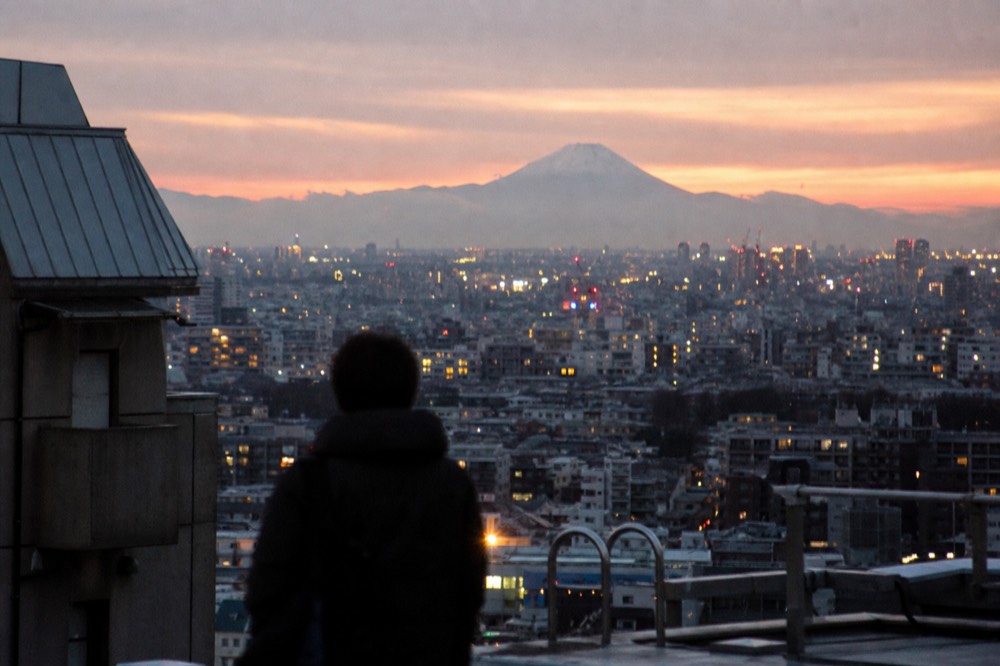
Sunset beats both, because it gives you day and night on one ticket. A daytime slot buys distance and detail, including Fuji on clear winter mornings. A night slot buys the neon grid and the Crossing lit up. A sunset entry hands you the daylight panorama, the golden hour, and the full night view in a single visit, which is why those slots sell out first.
The honest case for daytime is visibility. Air over the Kanto plain is clearest in the morning, before the day warms and haze builds, so if the mountain is your reason for coming, an early slot on a dry winter day is the better bet than an evening one. You also get to read the city properly: the Yoyogi Park canopy, the stadium roofs, the rail lines threading into the station beneath your feet. Nothing at night shows you the shape of Tokyo the way flat daylight does.
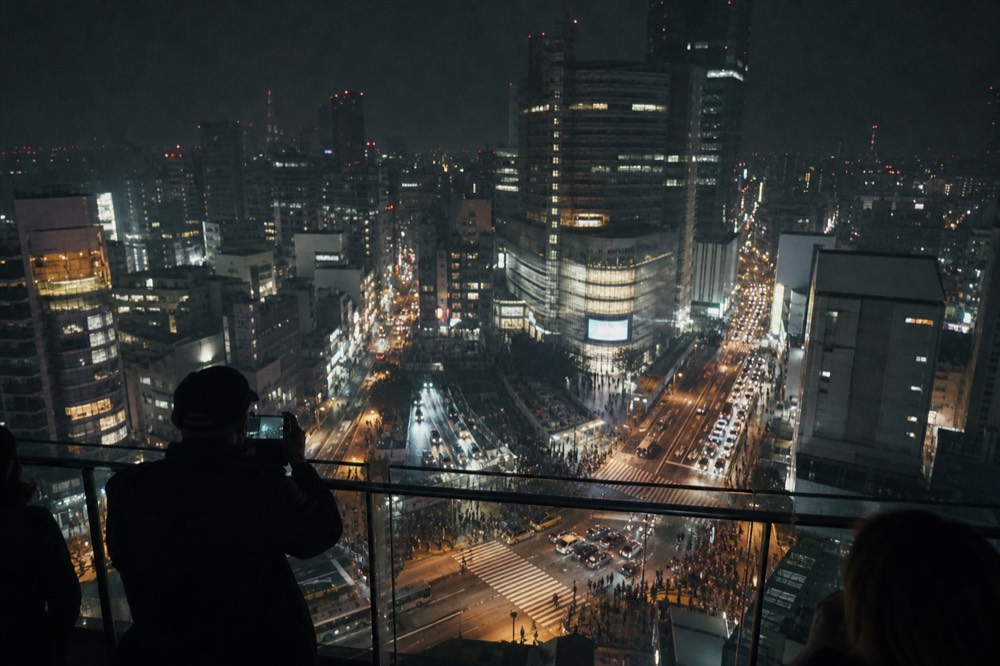
Night has one thing daylight cannot touch. From 229 metres the Crossing reads as a pulse rather than a place, filling and clearing every couple of minutes, and the surrounding blocks turn into a lit circuit board running out to the horizon in every direction. The Crossing Light show adds a projected sequence across the rooftop surface after dark, which is a genuine reason to stay past the blue hour rather than leave with the sunset crowd.
Sunset is the compromise that is not really a compromise. You enter in daylight, watch the transition, and leave in full night, and since there is no enforced time limit once you are inside, one entry covers all three states. The cost is company: this is the busiest window of the day by a wide margin. If you want the neon without the queue, a late slot after 20:00 is the quiet way to do it.
| Slot type | What it shows best | The trade | Best months for it |
|---|---|---|---|
| First slots, 10:00 to 11:30 | Long-distance clarity, Fuji odds, empty deck | Flat light, no city lights | December to February |
| Midday, 11:30 to 14:00 | Detail and orientation, warm rooftop | Harsh overhead light, weakest photos | Any, avoid July and August heat |
| Sunset window | Daylight, golden hour and night in one entry | Heaviest crowds of the day | All year, best October to February |
| Blue hour, 30 to 60 min after sunset | Balanced sky and city lights together | Short window, roof still full | All year |
| Full night, 20:00 to last entry 21:20 | Neon grid, Crossing Light show, calm deck | No horizon, no mountain | All year |
Why does 15:00 change the price, and how do you beat it in winter?
Admission bought on the official web shop costs 2,700 yen for an adult entering before 15:00 and 3,400 yen for an entry at 15:00 or later, a 700-yen step. The line applies to your entry time, not to how long you stay, and there is no enforced time limit on the deck. In the short-day months that gap is beatable.
Run the numbers for December. Sunset falls around 16:43, so an entry slot just before 15:00 puts you on the roof with a wait of about an hour and three quarters before the light turns. That is a long coffee, not an ordeal, and the 46F Sky Gallery exists precisely as somewhere to sit out the gap. You pay 2,700 yen instead of 3,400 and you still get golden hour. In November, January and October the same trick works with a wait of between 1 hour 40 minutes and 2 hours 13 minutes.
Now run it for July. Sunset lands at 19:00, and a pre-15:00 entry means four hours on the deck before anything interesting happens to the sky. Nobody does that willingly. From April through September the cheap tier and the sunset are simply too far apart, and you either pay the later-entry price or you go for a different experience entirely.
Two caveats keep this honest. Counter prices on 14F run 300 yen higher on both tiers, at 3,000 and 3,700, so the saving only exists if you buy online, and the official web shop states its tickets are non-refundable with no date or time changes. Check the tiers yourself on the official ticket page before you build a plan around a specific slot, and if you want every tier laid out side by side, the breakdown of every price tier in yen and dollars covers child rates and the counter markup too.
| Entry time | Online adult | Counter adult (14F) | Elementary child | Notes |
|---|---|---|---|---|
| Before 15:00 | 2,700 yen | 3,000 yen | 1,200 yen, counter only | The cheaper tier, and the winter sunset workaround |
| 15:00 or later | 3,400 yen | 3,700 yen | 1,200 yen, counter only | Covers every sunset slot from March to October |
| Any slot, age 6 and under | Free | Free | Free | No charge stated for the youngest visitors |
| Last entry 21:20 | 3,400 yen | 3,700 yen | 1,200 yen, counter only | Quietest deck of the day, full night view |
Which hours are busiest on the roof?
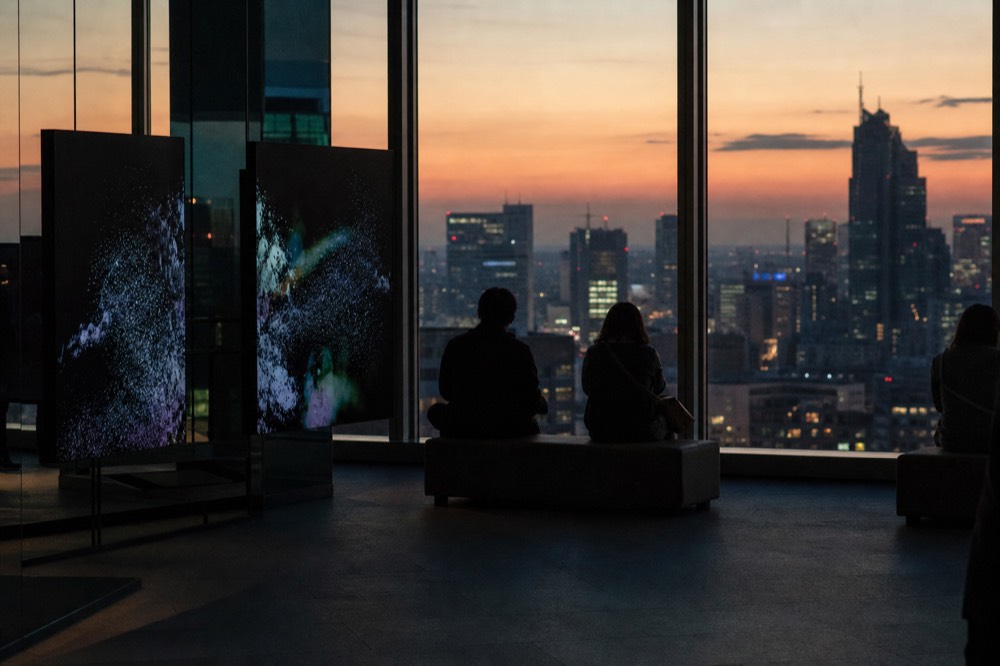
The sunset window carries the heaviest traffic of the day, and it is not close. The first slots at 10:00 are the quietest, the deck fills steadily through the afternoon, peaks in the hour bracketing sunset, then drains fast once the sky goes fully dark. From about 20:00 to the 21:20 last entry the roof is calm again with the full night view intact.
The curve makes sense once you see who is on it. Sunset slots draw everyone at once, because they are the only entry that delivers three views for one price, and they are the slots that vanish first when a date opens. Everyone in that window wants the same west-facing rail at the same moment, and the queue for the Sky Edge corner is longest between about thirty minutes before sunset and thirty minutes after.
Two windows are quietly excellent and almost nobody targets them. The first is the opening hour, when the roof is nearly empty, the air is at its clearest and the mountain odds are at their best. The second is the last ninety minutes before closing, once the sunset crowd has cleared out and the city is fully lit. Both cost you one of the three views, and both give you space.
The middle of the day is the weakest value on the clock. You are paying the same money for the least flattering light of the day, an exposed rooftop that gets genuinely hot in July and August, and a view that has neither the morning's clarity nor the evening's drama. If your schedule forces a midday visit, the deep-detail sections of what the three zones are actually like will matter more to you than the timing sections here.
| Entry window | Deck density | What you get | Who it suits |
|---|---|---|---|
| 10:00 to 11:30 | Quietest of the day | Clearest air, best Fuji odds, empty rails | Photographers, families, early risers |
| 11:30 to 14:00 | Moderate and rising | Full detail, harsh overhead light | Anyone slotting it between other plans |
| 14:00 to sunset minus 1 hr | Busy, building steadily | Warm afternoon light, decent space | Winter visitors on the cheap tier |
| Sunset hour, either side | Heaviest of the day | Golden hour, blue hour, first lights | Anyone who only visits once |
| Sunset plus 90 min to 20:00 | Falling away fast | Full night, thinning crowd | Second-visit and late-dinner plans |
| 20:00 to 21:20 last entry | Calm again | Neon grid, short Sky Edge queue | Night photographers, couples |
Does a weekday visit beat a weekend?
Yes, and by more than most visitors expect. Tuesday through Thursday are the softest days for both slot availability and deck density. Friday evening, all of Saturday and Sunday afternoon are the hardest, and a Japanese public holiday behaves like a Saturday no matter which weekday it lands on.
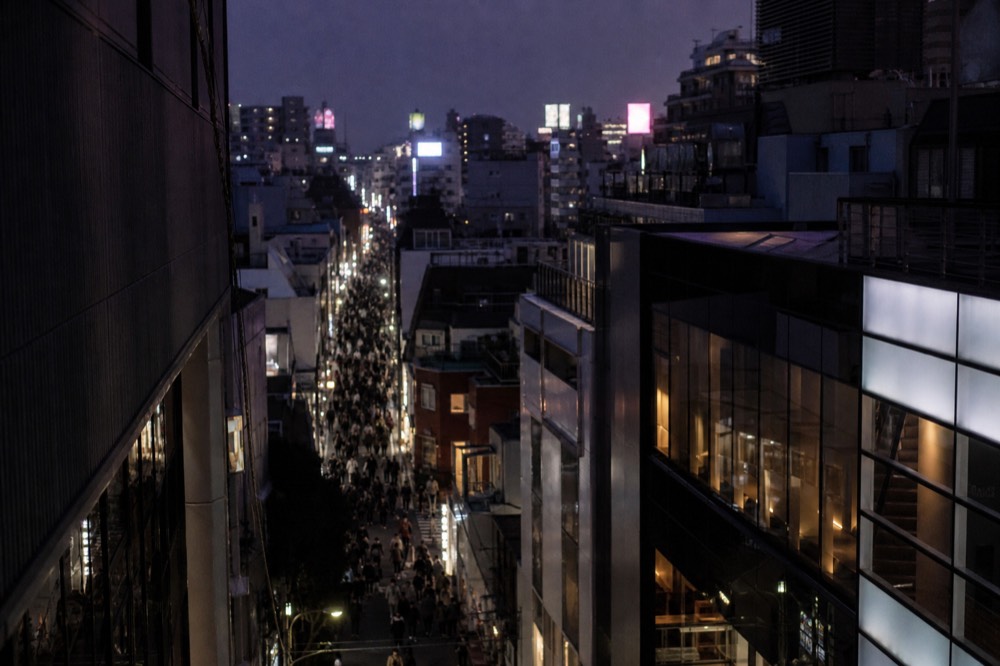
Shibuya runs on a rhythm you can feel at street level, and the roof inherits it. Saturday afternoon is when the district is at its fullest: Center Gai is shoulder to shoulder, the station concourse moves at a shuffle, and every sunset slot upstairs went days earlier. Sunday softens after about seven in the evening as day-trippers head home, which makes a Sunday night slot one of the better-kept options of the week.
Weekday mornings are the genuine gap. Between the 10:00 opening and about half past eleven on a Tuesday, the deck can feel close to private, and that is the same window with the best air clarity. If you are in Tokyo for several days and one of them is a weekday, spend it here rather than saving the deck for the weekend.
Public holidays deserve their own warning, because visitors rarely check them. Golden Week in late April and early May, the mid-August Obon period and the New Year days all load the district well past a normal weekend, and slots for those dates disappear the moment the 14-day window opens. The mechanics of that release, including the exact midnight timing, sit in the 14-day release explained.
| Day | Sunset slot availability | Deck density | The better move that day |
|---|---|---|---|
| Monday | Good | Light to moderate | Sunset slot, book a few days out |
| Tuesday to Thursday | Best of the week | Lightest | Morning slot for clarity, or sunset |
| Friday | Tightening after 16:00 | Busy from late afternoon | Late night slot after 20:00 |
| Saturday | Hardest of the week | Heaviest all day | Book at release or take a guided entry |
| Sunday | Tight until early evening | Heavy until about 19:00 | Late evening slot |
| Public holidays | Gone within minutes of release | Weekend-level or worse | Book the instant the date opens |
Which season gives the best view, and which one risks a closed roof?
Winter wins on sight and loses on comfort. December through February bring the driest air of the year and the highest odds of seeing Mount Fuji, frequently cited at 50 to 68 percent of days with a clear or partial view, with December the strongest month. June through August fall under 20 percent, and late summer carries the highest chance of a rooftop closure.
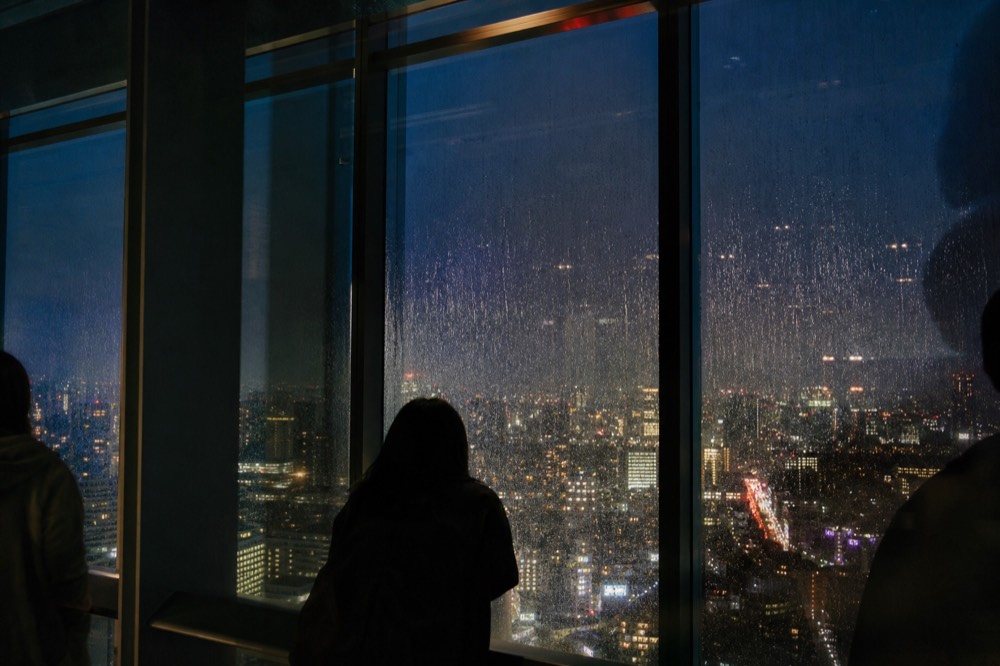
The closure rule is the one to plan around. The open-air Sky Stage shuts without notice in wind, rain, lightning or extreme heat, and when that happens visitors are held to the indoor 46F Sky Gallery rather than turned away. Refunds are handled only before you enter, so if the roof is already closed when you reach the gate, that is the moment to decide. Japan's typhoon season peaks through August and September, which stacks wind and rain risk on top of the heat clause exactly when Fuji odds are at their annual low.
Spring has the opposite problem. Late March into early April brings cherry blossom season and the single heaviest visitor load Shibuya sees all year, with slots for those two weeks gone almost immediately. The view itself is fine and the air is milder, but haze rolls in with the warmth and the mountain becomes a coin flip. Anyone planning around Fuji specifically should read when the mountain shows itself from the city before locking a date, since morning clarity beats evening light on that particular question.
Autumn is the quiet best-of-both. October and November hold sunset near 17:13 and 16:40 respectively, which puts golden hour inside the cheaper entry tier, the typhoon risk has mostly passed, and the air is drying out ahead of winter. The trade is that these are popular travel months in Japan generally, so weekend slots still move quickly.
| Season | Fuji odds | Rooftop closure risk | Crowd load | Verdict |
|---|---|---|---|---|
| December to February | Highest, often 50 to 68 percent of days | Low, but wind and cold cut visit length | Moderate, spikes at New Year | Best for the view, dress for it |
| March to early April | Moderate, haze increasing | Low to moderate | Heaviest of the year at blossom peak | Book at release or skip the fortnight |
| Late April to June | Falling | Rising with the June rains | High through Golden Week | Fine for night, poor for mountains |
| July and August | Lowest, under 20 percent | Highest, heat plus typhoon season | High | Go for neon, not for the horizon |
| September | Low to moderate | Highest, typhoon peak | Moderate | Keep a flexible date |
| October and November | Moderate and improving | Low | Moderate to high | Best all-round balance |
How early should you arrive for a sunset slot?
Forty-five minutes before sunset, on the roof, not at the gate. Build backwards from there: allow about fifteen minutes between the 14F gate and stepping onto the Sky Stage, so a December sunset at 16:43 means being on the roof by 15:58 and at the gate by roughly 15:40. Skip that margin and the Sky Edge queue swallows your golden hour.
The fifteen minutes between gate and roof are real, not theoretical. You clear the entry point on 14F, ride the escalator ascent, and pass through the 46F gallery, where you have to stop, because no bags of any kind go onto the rooftop. The coin-return lockers there take 100 yen and give it back, but there is a queue for them at peak, and stripping down to a phone in your pocket takes longer than you think when you are carrying a coat, a camera and a day bag.
Then there is the corner. The Sky Edge glass corner is the shot everyone came for and there is only one of it, so a line forms, and at peak it runs beyond a quarter of an hour. Join it early rather than at the moment the light peaks. My own habit with visitors is simple: get the corner done while the sky is still bright, then spend the actual golden hour anywhere on the west rail, where nobody is queueing and the light is identical.
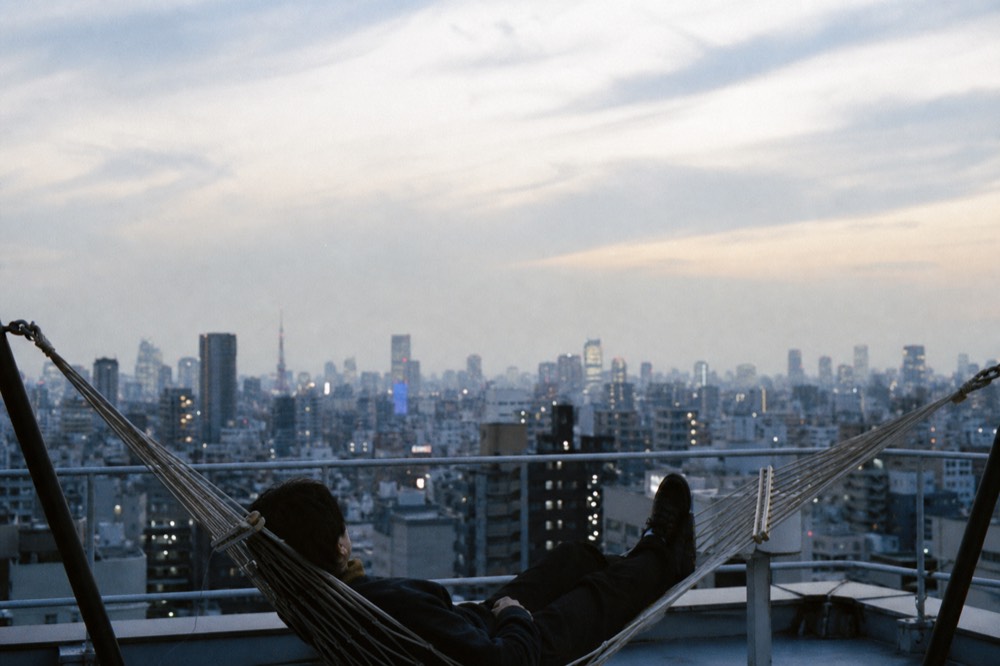
The rest of the roof rewards the same early arrival. The Cloud Hammocks fill up first and run on a first-come basis, and the west-facing rail positions go before the eastern ones on any clear evening. If sunset photography is the point of your visit, the rules, spots and shots that work covers what you can carry and where each frame actually happens.
| Slot you book | Where to be at gate time | What you should have done before the light turns | What that slot costs you |
|---|---|---|---|
| First slot, 10:00 | 09:45 | Nothing, the deck is empty | No sunset, no city lights |
| Winter pre-15:00 entry | 14:40 | Lockers, corner queue, west rail scouted | A wait of under two hours indoors |
| Sunset window | Sunset minus 60 min | Lockers and the corner, before peak | Highest price tier and the biggest crowd |
| Blue hour entry | Sunset minus 20 min | Nothing, you will be queueing during it | The daylight panorama entirely |
| Late night, 20:00 onward | 19:45 | Nothing, queues are short | The horizon and any chance of Fuji |
What if the sunset window is already sold out?
Then stop refreshing the web shop, because the counter cannot help you. Online allocation opens exactly 14 days ahead at midnight Japan time and sunset windows go within minutes on most dates, and once the web allocation for a date is gone the 14F counter has nothing left to sell. The remaining routes are a different hour, a different day, or an entry bundled into a guided tour.
The cleanest fallback is a later slot on the same date. You lose the daylight panorama and keep the entire night view, the queues are shorter, and the price tier is identical to the sunset one, so you are not paying extra for less. On a first trip to Tokyo, a 20:30 entry with the whole city lit is nobody's idea of a consolation prize.
The other route holds the hour you actually wanted. Guided walks that include deck admission carry their own entry allocation, which is why they can still be booked for evenings the web shop shows as gone. The sunset-timed walk pairs a reserved golden-hour entry with a guided route through the streets as they switch to neon, rated 4.8 across 6 reviews at $94 with free cancellation up to 24 hours out, so it costs nothing to hold a date while you keep watching the official release. If your evening is already committed and you just want the deck after dark, the night version runs at $98, rated 4.7 across 138 reviews, and includes someone who knows where the skyline frames work. Compare what is bookable tonight across the sunset entry and the after-dark walk before you settle for a leftover slot.
One last honest note about the plain admission ticket, which at $17.70 and 4.7 across 45,800 reviews is what most people should buy when the timing works. It is the cheapest way onto the roof and the fastest to arrange, and you can see which slots are still live for your dates in a few seconds. It only fails you when the window you want has gone, which for sunset on a Saturday it usually has. All the routes onto the roof sit side by side in the sunset and night entries, and you can compare every way onto the roof from one page if you are still deciding between a plain ticket and a guided evening.
Frequently asked questions
What time should I book Shibuya Sky for sunset?
Book the entry slot that puts you on the rooftop about 45 minutes before sunset for your date. In December that means being upstairs by 15:58, in July by 18:15. Allow roughly fifteen minutes between the 14F gate and the open roof for the escalator ascent and the 46F locker stop.
Does the sunset slot at Shibuya Sky sell out?
Regularly, and fast. Online sales open exactly 14 days ahead at midnight Japan time, and sunset windows go within minutes on most dates. If the web allocation for a date is gone, the 14F counter has nothing left either, so the realistic fallbacks are a later evening slot or a guided walk that includes its own deck entry.
Can you stay from sunset until it gets dark?
Yes. There is no enforced time limit once you are through the gate, which is why sunset visitors stay longest of anyone. A single entry covers the daylight panorama, golden hour, blue hour and the fully lit night city, and the Crossing Light show on the rooftop only runs after dark.
Is it worth going up if the weather is bad?
Not for the view. The open rooftop closes without notice in wind, rain, lightning or extreme heat, and visitors are held to the indoor 46F gallery instead. Refunds are handled before entry only, so check conditions at the gate rather than after. The official FAQ on closures is the source to trust on the day.
Which month is best for seeing Mount Fuji from the deck?
December, with January and February close behind. Winter brings the driest air of the year and clear or partial mountain views on roughly half to two thirds of days, against under 20 percent from June to August. Morning slots beat evening ones for clarity, since haze builds as the day warms.
Is the night view better than the sunset view?
Different rather than better. Night gives you the neon grid, the Crossing reading as a pulse from 229 metres, and the shortest queues of the day after 20:00. Sunset gives you daylight, golden hour and night on one entry. If you only visit once and the slot exists, take sunset. If you want space, take the last hour.