Things to Do in Shibuya: A Local Guide's Map of the District
I have worked this district since 2022, and the honest version of Shibuya is smaller than people expect. Almost everything worth your afternoon sits within a twelve-minute walk of one dog statue.
 By Mia Nakamura, licensed Tokyo tour guide based in Shibuya
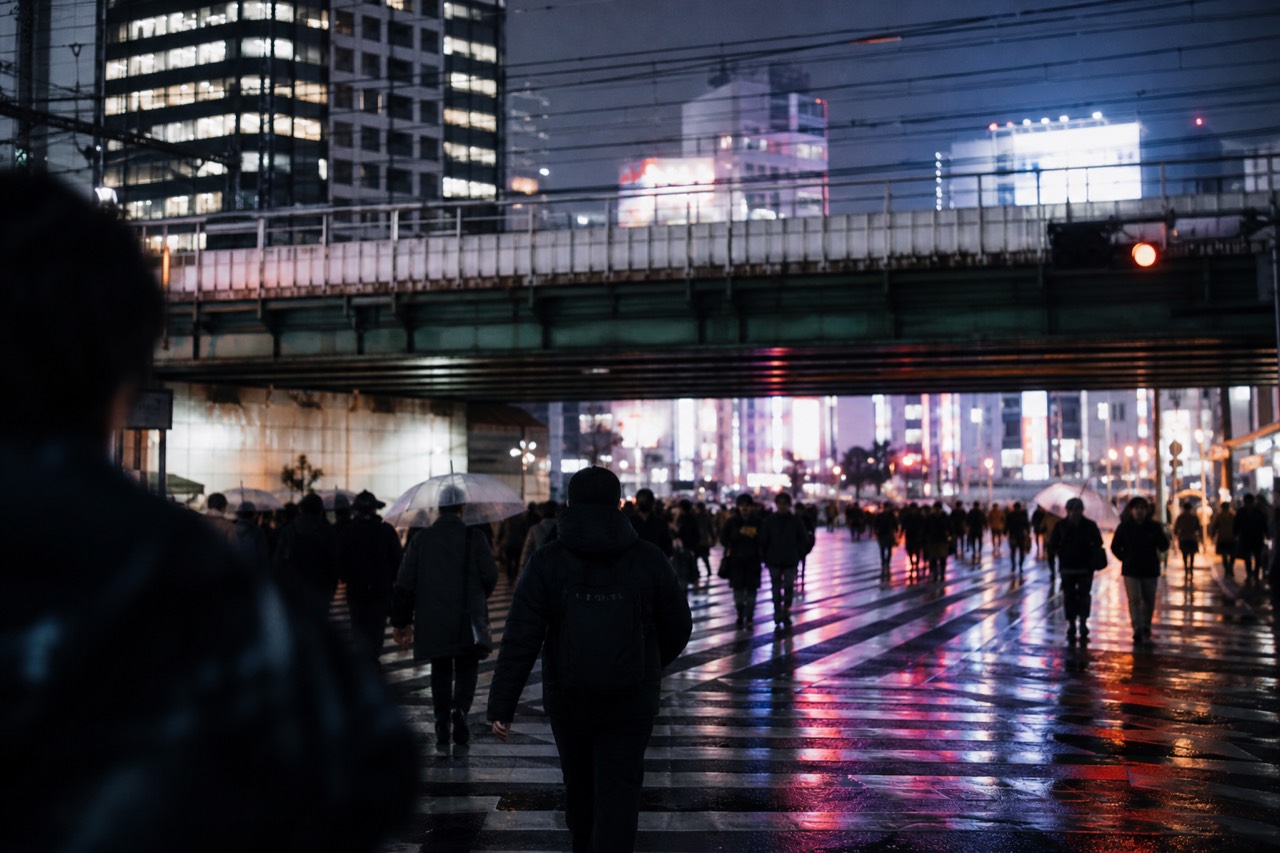
Short answer
The must-do list is short: cross the Scramble at least once, meet at Hachiko, walk Center Gai, take the terraces at Miyashita Park, and finish 229 m up on the Shibuya Scramble Square rooftop at dusk. That is a five to six hour day, and the whole circuit fits inside a twelve-minute walking radius of the station.
There is a moment, roughly forty seconds into every tour I run, when someone stops dead in the middle of the Scramble and turns around to look back at where they came from. I have stopped trying to prevent it. The crossing does that to people the first time, and the honest thing to do is stand still with them and let the light cycle catch us both, because the second green is when you actually start seeing it rather than surviving it.
Shibuya rewards that kind of pause more than most Tokyo districts, and it punishes a rushed itinerary. What looks on a map like a sprawling entertainment quarter is really a tight cluster of streets on a slope, with a station at the bottom of the bowl and everything interesting radiating out and uphill from it. You can walk from the dog statue to the rooftop lift, past the crossing, a shopping street, a park built on top of a car park and a brand-new complex, in under fifteen minutes. Most visitors take a whole day over it, and they should.
What is a must do in Shibuya?
Cross the Scramble on foot, meet at the Hachiko statue, walk the length of Center Gai, spend an hour on the Miyashita Park terraces, and go up to the Shibuya Scramble Square rooftop for sunset. Everything else in the district is optional. Those five things, in that order, are the day.
I put the crossing first for a reason that is not sentimental. Doing it on foot before you see it from anywhere else fixes the scale in your head, and every later view of it, from a café window or from 229 metres, then means something. Do it in the other order and the rooftop version reads as an abstract pattern rather than as the place you were standing twenty minutes ago.
The rest of the list is a walking order more than a ranking. Hachiko is thirty seconds from the crossing and it is where you will end up meeting anyone anyway. Center Gai runs directly off the north side and delivers the noise and the neon at ground level. Miyashita Park is a five-minute walk northeast, and it is the one place in the district where you can sit down outdoors without buying anything. The rooftop is directly above the station, which makes it the natural end of the day rather than a separate expedition.
What I would leave off a first visit: the department stores, unless shopping is the trip, and the club district up Dogenzaka, unless you are staying out past midnight. Both are genuinely part of Shibuya. Neither is what you came for on day one. If you want the whole district covered with someone explaining it as you walk, check dates and the current price for the guided version that finishes on the roof.
| Must do | Time it takes | What it costs | Best hour |
|---|---|---|---|
| Cross the Scramble on foot | 5 minutes, twice | Free | Any, but after dark for the neon |
| Hachiko statue | 10 minutes with the queue | Free | Early morning if you want a clean photo |
| Center Gai end to end | 30 to 45 minutes | Free to walk | Late afternoon, as the signs come on |
| Miyashita Park terraces | 1 hour | Free to enter | Mid-afternoon |
| Sakura Stage and the south side | 45 minutes | Free to walk | Any |
| Rooftop at 229 m | 1 to 2 hours | 2,700 yen before 15:00, 3,400 yen after | 45 to 60 minutes before sunset |
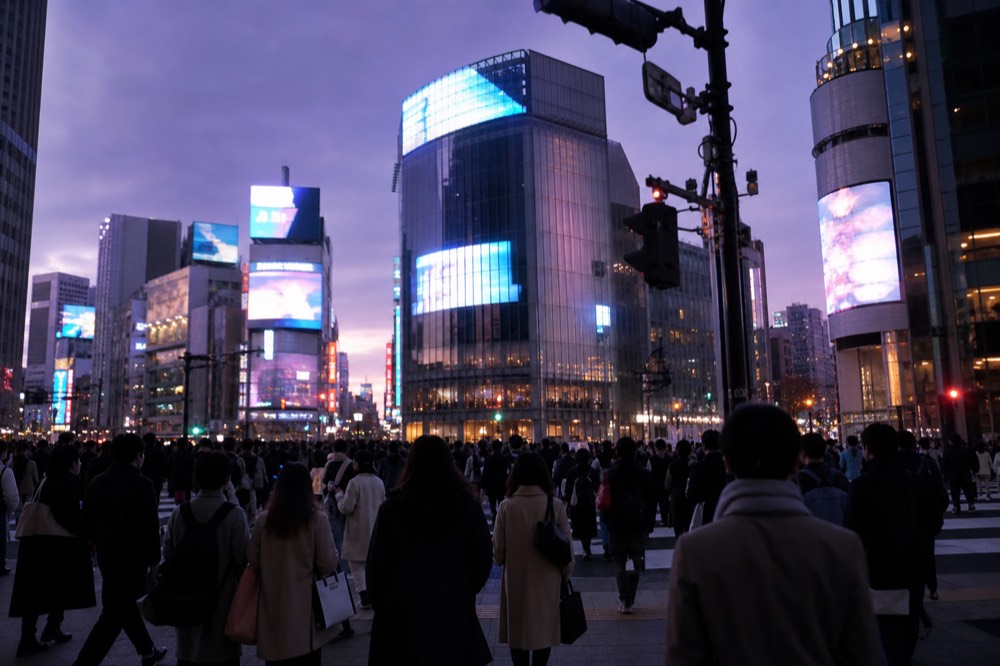
What is the Scramble Crossing actually like on the ground?
Loud, fast and shorter than you expect. Up to about 3,000 people move at peak on a single green light, the cycle runs roughly every two minutes, and a 2014 flow survey by the local redevelopment association measured around 260,000 crossings on weekdays and about 390,000 on non-working days.
The number that surprises people is not the total, it is the crossing time. From the Hachiko side to the far corner takes about twenty seconds at a normal walk, and the green is generous enough that nobody hurries. What makes it feel intense is the geometry: every direction goes at once, including both diagonals, so the crowd interpenetrates rather than flowing in lanes. Nobody bumps into anybody. I have watched thousands of people do this and the collision rate is close to zero, which is the genuinely remarkable part.
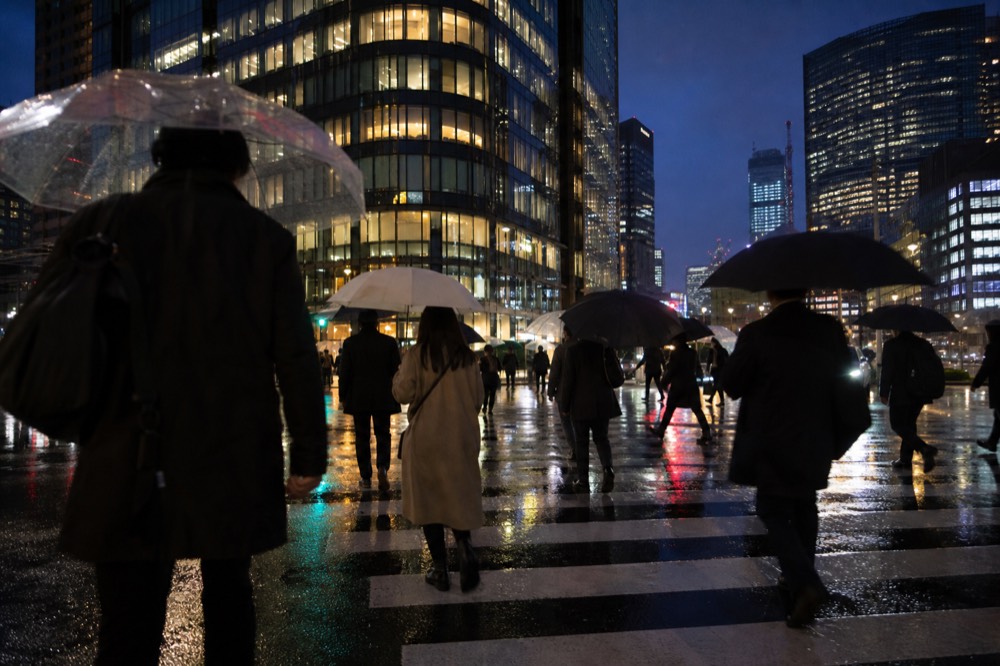
Read the rhythm and you can use it. The heaviest cycles run around the evening commuter peak on weekdays and through the afternoon at weekends, and the quietest are early morning, before about 8:00, when you can have the intersection nearly to yourself. Rain changes the picture completely, in a good way for photographs: the umbrellas turn the crowd into a moving mosaic and the wet asphalt doubles the neon.
Two practical notes I give every group. Stand still somewhere near the middle for one full cycle at least once, because moving with the crowd and being surrounded by it are different experiences. And keep your phone in front of you rather than out to the side, since the diagonal traffic means someone is passing on both flanks the whole time. The survey data and the crossing's history are collected on the reference entry for the intersection, and the longer story of how it became a global image sits in why the Crossing became famous.
| What is measured | The figure | When measured |
|---|---|---|
| People per green light at peak | Up to about 3,000 | Commonly cited peak figure |
| Average per light cycle | Roughly 1,000 to 2,500 | Common working estimate |
| Cycle length | About 2 minutes | Current signal timing |
| Weekday crossings per day | About 260,000 | 2014 flow survey |
| Non-working day crossings | About 390,000 | 2014 flow survey |
| Crossing time on foot | About 20 seconds | Corner to opposite corner |
Who was Hachiko, and why does everyone meet at the statue?
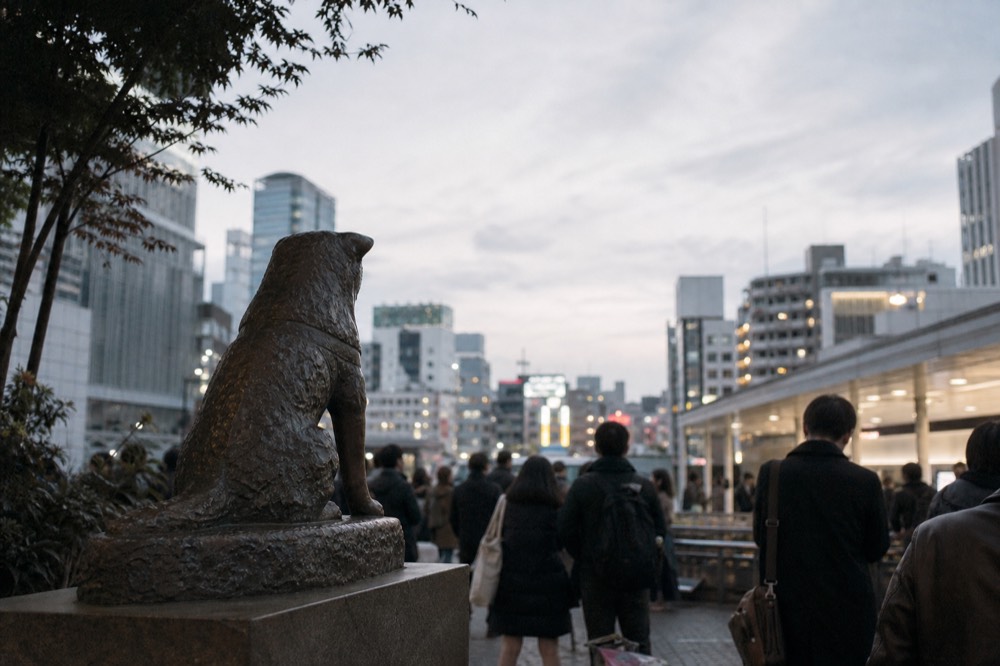
Hachiko was an Akita born in November 1923 who kept coming to Shibuya Station after his owner died in 1925, and went on doing it for nearly ten years until his own death on March 8, 1935. The first statue went up in 1934 with the dog present, was lost to the war effort, and the one standing today dates to 1948.
I bring every group here first, before the crossing, because the statue explains the square. The exit is literally named after the dog, the plaza around it is the default meeting point for the entire district, and if you ask a Tokyo friend where to meet in Shibuya they will say Hachiko without thinking about it. It is a functional landmark that happens to be a monument, which is rare.
The story itself is worth telling properly rather than as a sad anecdote. Professor Hidesaburo Ueno took the dog home in 1924 and died suddenly the following year. The remarkable part is not the first few weeks of waiting, it is the decade: the dog was fed by station staff and local vendors, became a national story in the 1930s, and the statue was raised while he was still alive to attend the unveiling. That first bronze was melted down during the war, which is why the current figure is a 1948 replacement. The full record is on the Hachiko entry.
Expect a queue for photographs, especially at weekends, and expect it to be an orderly one. Early morning is the only reliable window for a clean shot. During Halloween week the statue is often enclosed by temporary fencing as part of the crowd controls, so if that is your travel week, do not build a photograph around it. And the square itself is due to change: the wider station rebuild will eventually reshape the Hachiko plaza, with major phases targeted around 2030 and the full project running to fiscal 2034.
| Date | What happened |
|---|---|
| November 1923 | Hachiko born near Odate, Akita Prefecture |
| 1924 | Taken to Tokyo by Professor Hidesaburo Ueno |
| 1925 | Ueno dies; the dog keeps returning to the station |
| April 1934 | First bronze statue unveiled, with Hachiko present |
| March 8, 1935 | Hachiko dies, aged 11, after nearly ten years of waiting |
| Wartime | The original statue is scrapped for the war effort |
| 1948 | The current statue is installed |
| 2026 | Still the district's default meeting point |
Where do you go after the Crossing?
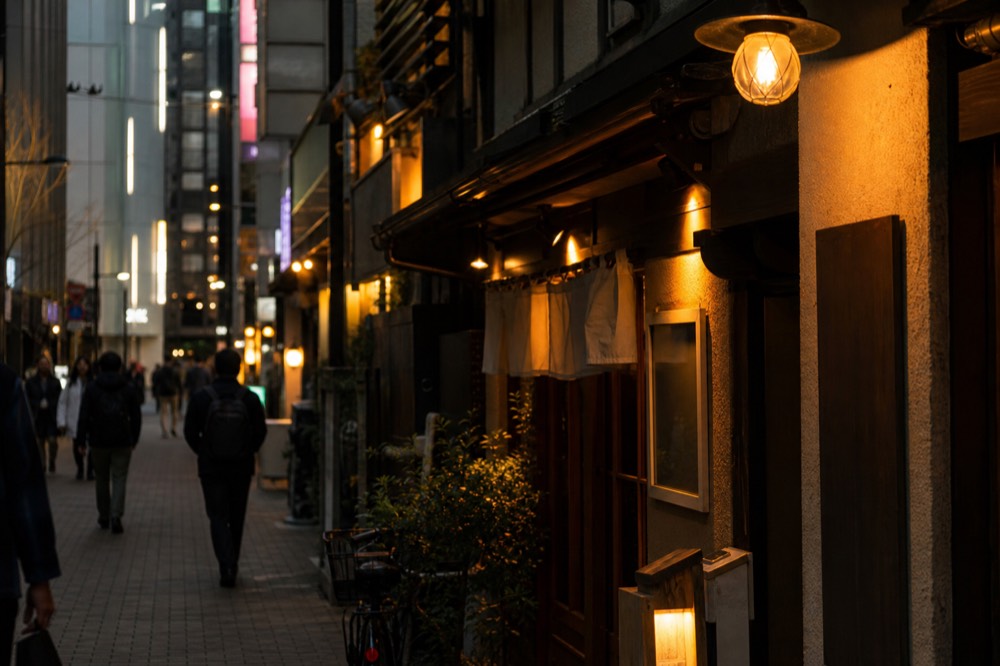
North into Center Gai, the pedestrianised main street that runs off the far side of the intersection, then uphill into the side streets behind it. That is where the arcades, the ramen counters and the cheap eating are. Everything from the crossing to the top of Center Gai is a ten-minute walk.
Center Gai is the loud one, and it is loud on purpose. Screens on both sides, music competing from three doorways at once, and a density of small businesses stacked four floors up in buildings barely wider than a shopfront. It reads as chaos and is actually well organised: the ground floors are food and drink, the upper floors are arcades, karaoke and specialist shops, and the vertical signage tells you which is which if you look up rather than ahead.
The streets behind it are where I take people who want the district rather than the spectacle. One block off the main run, the volume drops noticeably, the shops get narrower and the prices come down. Nonbei Yokocho, the tiny alley of one-counter bars near the tracks, is the extreme version of that: rooms with six seats, no English menus in most of them, and an atmosphere that has nothing to do with the crossing two hundred metres away.
Uphill on the west side, Dogenzaka climbs toward the nightlife quarter and the record shops. I would not send a first-time visitor up there in daylight, and I absolutely would after 21:00 if they want to see what Shibuya does at night. Shibuya 109 sits at the fork, and the Magnet building beside it carries the Mag's Park rooftop, which is the cheap elevated crossing view and a useful stop if you want the low angle before the high one. The comparison of every crossing viewpoint is in the rooftop photography guide.
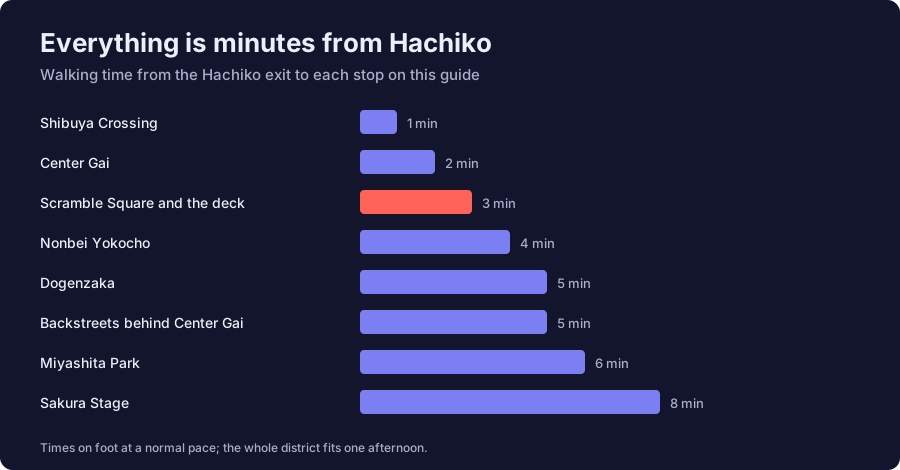
| Zone | What it is | Walk from Hachiko | Best for |
|---|---|---|---|
| Center Gai | Pedestrian main street, arcades and food | 2 minutes | The noise, the neon, cheap eating |
| Side streets behind Center Gai | Narrow shopping and small restaurants | 5 minutes | Better prices, fewer crowds |
| Nonbei Yokocho | Alley of tiny counter bars by the tracks | 4 minutes | An evening drink with locals |
| Dogenzaka | Uphill nightlife and music quarter | 5 minutes | After 21:00 only |
| Miyashita Park | Elevated park over shops and a food alley | 6 minutes | Sitting down, eating, resting |
| Sakura Stage and the south side | New complex at the south exit | 8 minutes | Newer restaurants, calmer streets |
| Shibuya Scramble Square | Station tower with the rooftop deck | 3 minutes | The 229 m view, the day's finish |
What has opened recently in Shibuya?
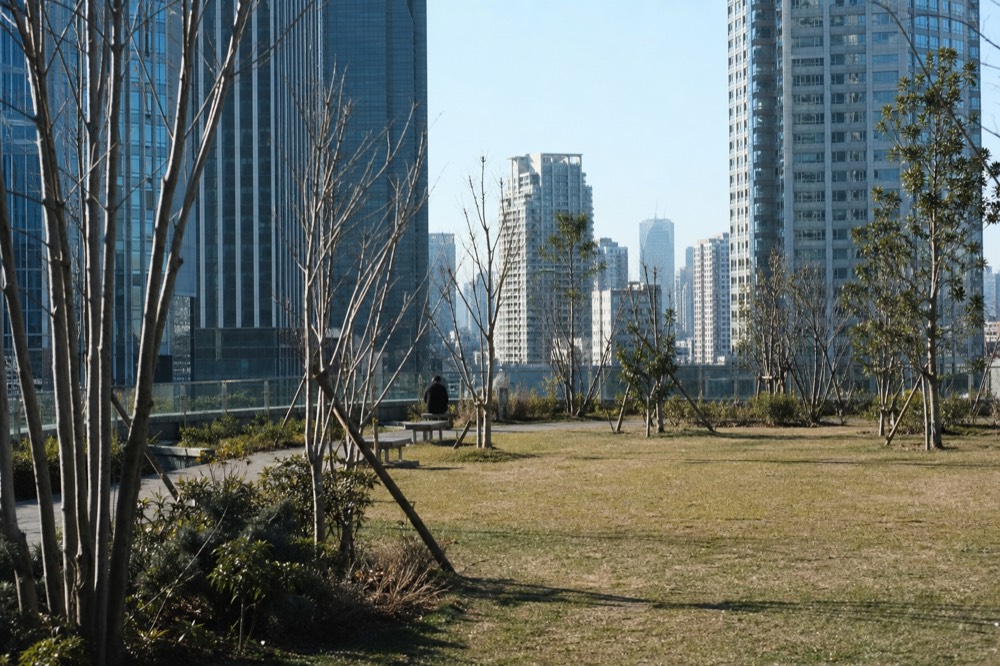
Sakura Stage, the mixed-use complex on the south side of the station, opened on July 25, 2024 alongside a new JR South Exit, and it has changed how the southern half of the district works. Miyashita Park, the elevated park built over a retail block, remains the district's best free place to sit down.
Sakura Stage matters for a reason that is not about its shops. The new South Exit reroutes a large volume of foot traffic that used to funnel through the Hachiko side, which has made the crossing area marginally less congested and opened up a whole southern approach that most guidebooks have not caught up with. Streets down there are quieter, the restaurants are newer, and the walk back up to the station is a two-minute deck rather than a scramble through crowds.
Miyashita Park is the one I recommend hardest to people who arrive tired. It is a park sitting on a roof, with lawns, a climbing wall and a skate area on top and a covered food alley running along the ground level underneath. Nothing about it charges admission. On a spring afternoon it is where I would spend the middle hours of a Shibuya day, and it solves the district's biggest practical problem, which is that Shibuya has almost nowhere else to sit that is not a business.
One floor of Shibuya Scramble Square that visitors walk straight past is the 15th, which holds an innovation and community space rather than shops. It is not a tourist attraction and I am not sending you there to see it, but it tells you something useful about the building: the tower is a working piece of the district, with retail from two basement levels up to the 14th floor, offices filling most of the middle, and the observation levels stacked on top. The rooftop is the last thing in a stack, not a standalone attraction bolted onto a mall.
The wider context is that the whole station area is a construction site with a thirty-year plan. The redevelopment sometimes called a once-in-a-century project has major phases targeted for around 2030 and full completion in fiscal 2034, including a rebuilt Hachiko square and further towers beside the existing one. Visiting in 2026 means walking past hoardings in places and benefiting from the parts already finished. The building above the station has its own story, told in what Shibuya Scramble Square is known for, and its official visitor detail sits on Tokyo's tourism page for the observation deck.
What are the street rules in Shibuya now?
Drinking on the street is banned year-round in the designated Shibuya Station area, under nighttime restrictions typically running from 6 pm to 5 am, introduced through 2024 ordinance revisions and enforced since. Halloween brings extra measures on top: fencing, alcohol sale requests to retailers, pedestrian restrictions and a heavier security presence.
This one catches visitors out constantly, because Japan generally allows public drinking and Shibuya specifically does not any more. The ban is a local ordinance covering the station area, it applies all year rather than only at Halloween, and the practical effect is simple: buy a drink from a convenience store and drink it inside a bar, a restaurant, a park area where it is permitted or your hotel, not on the pavement outside the store. Police do enforce it in the busy hours.
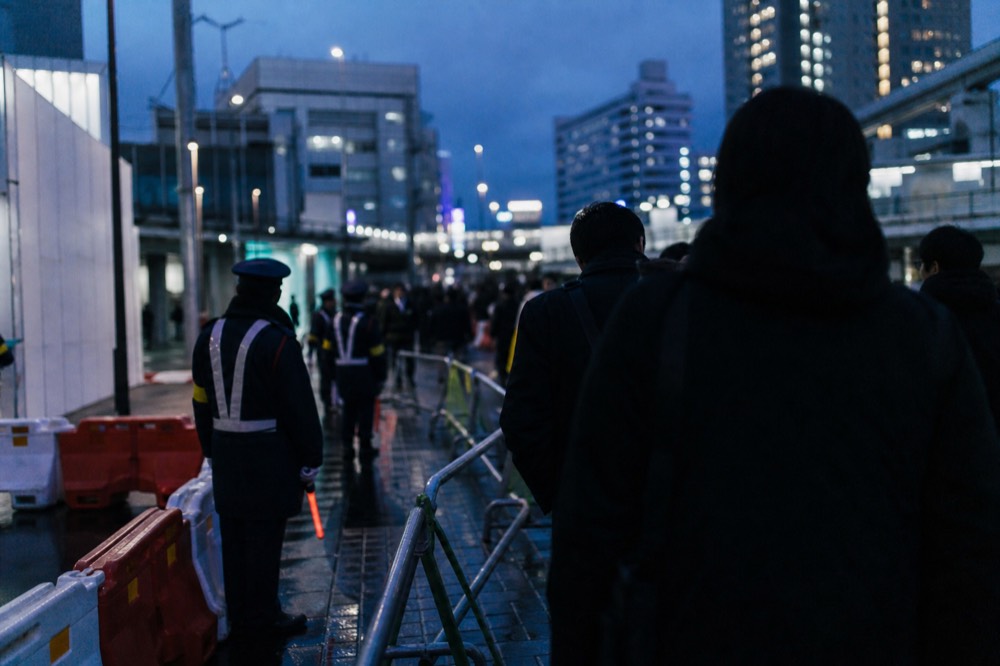
Halloween is the extreme case and worth planning around if your dates fall in late October. The district has spent several years actively discouraging the crowds that used to fill the crossing, with campaigns asking people not to come, roughly 125 security personnel deployed in recent years, requests to shops to limit or stop alcohol sales, traffic and pedestrian flow restrictions, and temporary enclosures including fencing around the Hachiko statue. If you want Shibuya at Halloween, come for the atmosphere and expect to be moved along.
New Year is the other date to know. The crossing gets managed heavily on December 31 into January 1, with similar flow controls, and the rooftop deck runs special arrangements at that time. Nothing about either occasion makes the district unpleasant, but both make it a different place, and neither is where I would take a first-time visitor who wanted to understand ordinary Shibuya.
| Rule | When it applies | What it means for you |
|---|---|---|
| Street-drinking ban | Year-round, typically 6 pm to 5 am, station area | Drink inside a venue, not on the pavement |
| Halloween crowd controls | Late October, around Oct 31 and Nov 1 | Fencing, restricted flows, alcohol sale limits |
| Hachiko statue enclosure | Halloween period | No statue photograph that week |
| Security deployment | Halloween period | Roughly 125 personnel in recent years |
| New Year controls | December 31 into January 1 | Managed crossing flows, special deck arrangements |
| Rooftop closure | Any time, in wind, rain, lightning or extreme heat | Indoor 46F only, refunds before entry only |
How would a local spend one day in Shibuya?
Start at Hachiko around 09:00 while the square is still quiet, do the Crossing twice, walk Center Gai, break at Miyashita Park through the middle of the day, take the south side and Sakura Stage in the afternoon, then go up to the rooftop 45 to 60 minutes before sunset and stay through blue hour.
I build almost every full day in this district on that spine, and the reason is light rather than logistics. Morning gives you the statue and the crossing without the crowds. The middle hours are the district's weakest, visually, so that is when you sit down and eat. The last two hours are when Shibuya turns on, and the rooftop is the only place that shows you the whole thing doing it at once.
Sunset is the moving part, and it moves a lot. Tokyo sunset runs from about 16:43 in December to nearly 19:00 in June and July, so the same plan means a 16:00 rooftop entry in winter and a 18:00 one in midsummer. Book accordingly, because the sunset slots go first and the online release opens exactly 14 days ahead at midnight Japan time. The month-by-month version of that calculation is in the sunset timing breakdown, and if you would rather spend a winter afternoon looking west, when the mountain is visible from the city covers the odds.
For people with only half a day, cut the south side and the park, keep the statue, the crossing, Center Gai and the roof, and you still have a good Shibuya. For people with two days, add Harajuku and Meiji Shrine, which are one stop or a twenty-minute walk north and make a natural morning. A guided version that links the two is worth checking for current availability if you want the shrine explained rather than just visited.
| Time | Where | Why then |
|---|---|---|
| 09:00 | Hachiko statue and the square | Quietest hour for a clean photograph |
| 09:30 | Scramble Crossing, both directions | Light traffic, easy to stand still and watch |
| 10:00 | Center Gai and the side streets | Shops opening, no crowd yet |
| 12:00 | Miyashita Park and the food alley below | The one place to sit down outdoors |
| 14:00 | Sakura Stage and the south exit side | Calmer streets, newer restaurants |
| 16:00 | Back through the crossing, low angle viewpoint | Neon coming on at street level |
| Sunset minus 60 min | Rooftop entry on 14F | Daylight, sunset and blue hour on one ticket |
| Sunset plus 40 min | Still on the roof | Blue hour is the best light of the day |
Where do you eat in Shibuya on any budget?
Everywhere, at every price. The cheapest good eating is the standing and counter places in the side streets behind Center Gai and the food alley under Miyashita Park. The middle is the restaurant floors stacked inside the station towers. The top is the upper floors of Shibuya Scramble Square and the newer rooms around Sakura Stage.
Vertical is the thing to understand about eating in this district. Ground-floor frontage in Shibuya is the most expensive retail space in the city, so the restaurants go upstairs, and a building with one narrow door often has six or seven separate places inside it stacked floor by floor. The signage on the outside lists them by level. Learning to read those vertical stacks is the single skill that turns Shibuya from expensive to affordable.
The station basements are the other local habit worth copying. The department store food halls under the station sell prepared food of a standard that would be a restaurant meal anywhere else, and they discount heavily in the last hour before closing. Take it up to the Miyashita Park lawn or the Sakura Stage deck and eat outside, remembering that the street-drinking ban applies to alcohol on the pavement rather than to food.
Timing your meal around the rooftop is the small piece of planning that pays off. Eat before you go up rather than after, because nothing on the deck is a meal, the roof bans food and drink outright, and the queue for a table anywhere in the towers is at its worst in the hour after sunset when several hundred people come down at once. A late lunch or an early dinner, then the deck, then a drink somewhere in the side streets afterwards, is the sequence that works. If you would rather have the whole evening sequenced for you, including the entry slot, see how the evening walks are running for your dates.
I deliberately do not hand out restaurant names, and here is why. The turnover in this district is brutal, places I recommended two years ago are gone, and a specific name in a guide is a promise that ages badly. What does not age is the method: go one street back from the main run, look up, pick a floor with a queue of local office workers rather than tourists, and check whether there is a ticket machine at the door, which usually signals a fast and cheap counter. For the version of the day where someone does this selection for you, browse the guided options for the district.
| Budget | What it buys | Where to look |
|---|---|---|
| Cheapest | Counter ramen, standing bars, ticket-machine shops | Side streets one block off Center Gai |
| Cheap | Prepared meals discounted late in the day | Department store food halls under the station |
| Middle | Sit-down restaurants with English menus | Restaurant floors inside the station towers |
| Middle | Covered food alley, small plates, shared tables | Ground level under Miyashita Park |
| Upper | Newer rooms, less crowded, table service | Sakura Stage and the south exit side |
| Top | High-floor dining with a view | Upper floors of Shibuya Scramble Square |
Where should you stay near Shibuya Sky?
Anywhere inside a fifteen-minute walk of the station puts the rooftop within reach without a train ride. A few hotels sit close enough that you could clear the 14F gate on foot from your room, spanning upscale, mid-range and budget.
I get asked this more than almost anything else, usually by someone who has already booked the ticket and is now looking at a map of a station they do not recognise. Staying in Shibuya itself is not the only reasonable choice in Tokyo, but it removes one whole category of trip planning: no last train to catch back from the deck, no transfer with bags after a late arrival, and a sunset slot that costs you a five-minute walk rather than forty minutes on the Yamanote line.
Cerulean Tower Tokyu Hotel Check rates ›
Upscale, and high enough itself that a city-view room does some of the deck's job before you have even left the hotel. A short walk from the station.
Shibuya Excel Hotel Tokyu Check rates ›
Mid-range, and directly connected to the station through Mark City, which matters more than the price tag on a night with luggage.
Shibuya Tokyu REI Hotel Check rates ›
The budget and business pick, plain rooms, a few minutes from the station on foot, the right choice if the room is just where you sleep between walks.
None of that is the only way to do it. Shinjuku and Ikebukuro both put you on a direct line back to Shibuya in fifteen to twenty minutes and often cost less, and plenty of visitors are happy trading a short evening train ride for a cheaper room somewhere else. Staying in Shibuya itself just removes that trade entirely.
The building at the centre of all this is worth understanding before you go up it, and the reference entry on Shibuya Scramble Square has the construction detail. For what the visit is actually like floor by floor, the walkthrough of the deck covers the ascent, the indoor level and the roof, and the direct rooftop admission is the simplest way in if you are not taking a guided evening.
Frequently asked questions
How long do you need in Shibuya?
Half a day covers the essentials: Hachiko, the Crossing, Center Gai and the rooftop. A full day lets you add Miyashita Park, the south side around Sakura Stage and a proper meal, which is how I would use it. Two days lets you fold in Harajuku and Meiji Shrine, which are a twenty-minute walk or one train stop north.
What is a must do in Shibuya?
Cross the Scramble on foot, then see it from above. Those two things, in that order, are the district in miniature. Add the Hachiko statue thirty seconds away, a walk down Center Gai for the ground-level noise, and an hour on the Miyashita Park terraces, and you have covered everything a first visit needs.
Can you drink on the street in Shibuya?
No, not in the designated station area. A year-round ordinance restricts street drinking there at night, typically from 6 pm to 5 am, following revisions made in 2024. Buy your drink and take it into a bar, a restaurant or your hotel. Enforcement is real, and it is heaviest during Halloween and New Year periods.
Is Shibuya worth visiting at Halloween?
Only if you want to see crowd management rather than a party. The district actively discourages the old Halloween gatherings, with security deployments of roughly 125 personnel in recent years, requests to retailers to limit alcohol sales, pedestrian flow restrictions and temporary fencing that has included the Hachiko statue. It is a fascinating thing to witness and a poor first visit.
Where is the best place to see Shibuya Crossing for free?
Street level is free and is where you should start. For an elevated angle without a full deck ticket, the Mag's Park rooftop above the Magnet building has been the standard cheap option for years. Paid low-level alternatives include window seats at the Tsutaya building café and the café floors of the L'Occitane building, both of which cost the price of a drink.
Is Shibuya Station still under construction?
Yes, in parts. The station area is inside a long redevelopment with major phases targeted around 2030 and full completion in fiscal 2034, including a rebuilt Hachiko square. The 2024 opening of Sakura Stage and the new South Exit already improved the flows, so a 2026 visit means some hoardings and several genuinely better walking routes.